
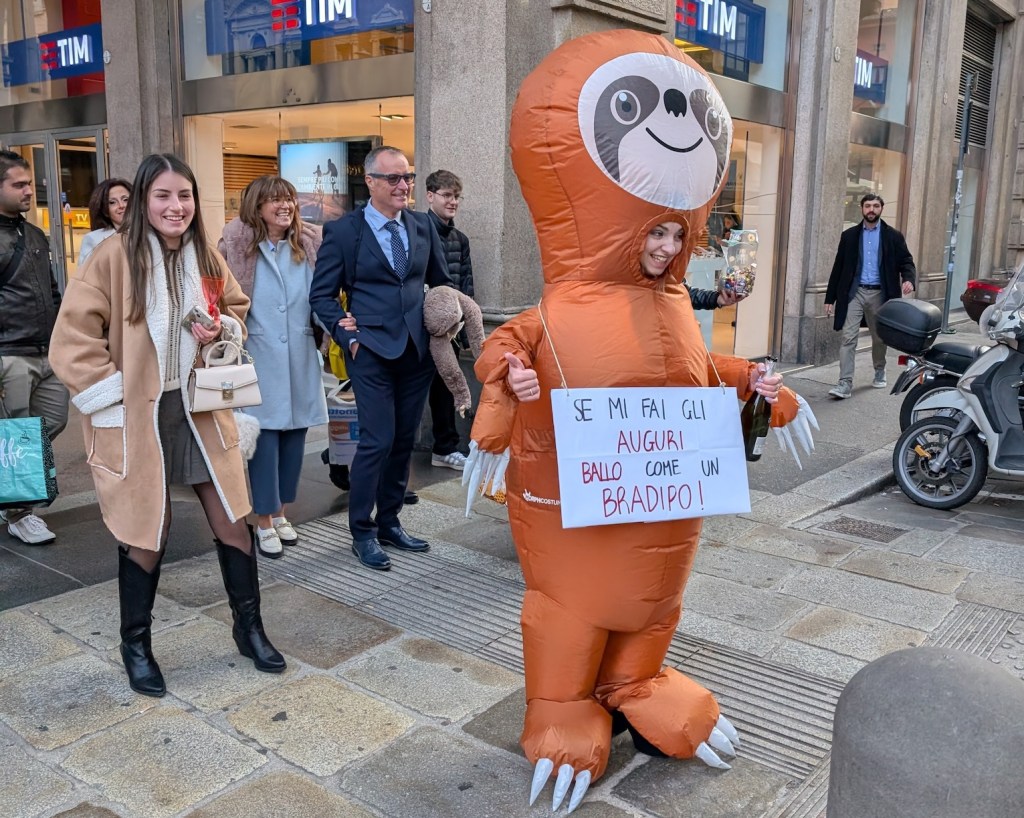
Values Clarification Opportunity: you’ve just gotten off the train in a strange city where you don’t know a soul and don’t speak the language. A gray haired gentleman scurries over to you to offer you a chocolate bon-bon out of a plastic bag. Question: Do you eat it?
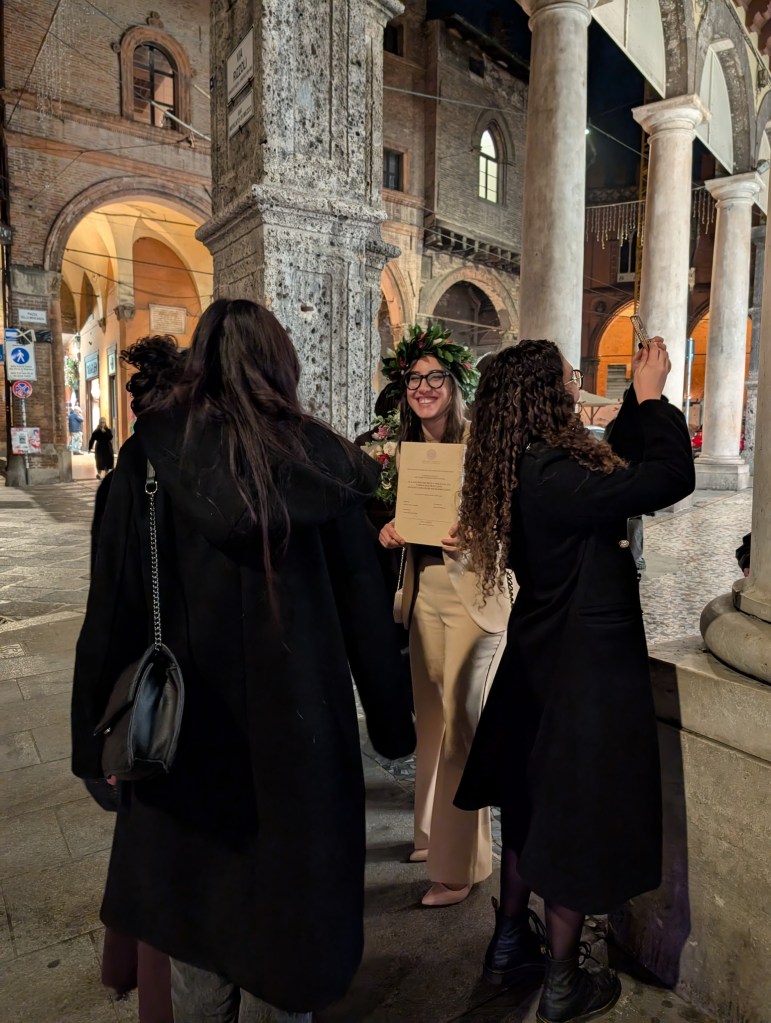
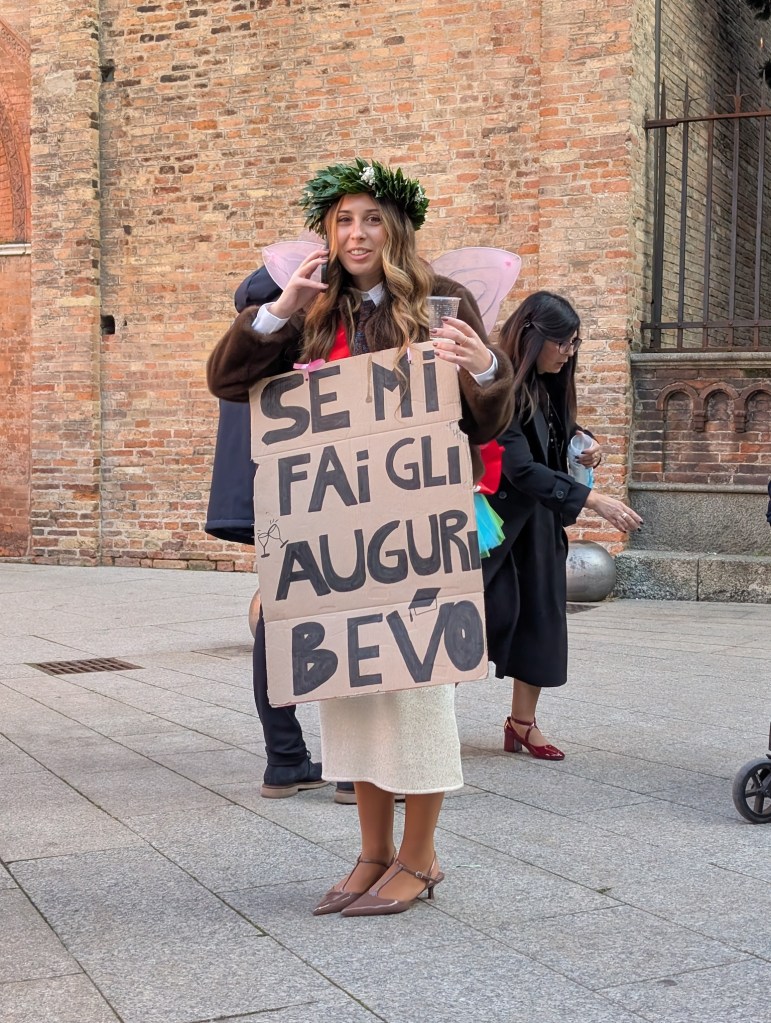
Now, how does that answer change if he is in the entourage of – and probably also father of – a young woman promenading down the street in an inflatable sloth costume and wearing a sight that says “Se mi fai gli auguri ballo come un bradipo!”? (Or approximately, “If you wish me congratulations, I will dance like a sloth!”)
I did. And she did. Not that I had any qualifications to judge how closely her little prancing circle approximated any repetitive movement associated with Bradypodidae. But it made her smile, and it made me smile. And my Bad Italian drew cheers from her entourage, leading to the aforementioned scurry and offer of candy. I can’t say I gave it a second thought before popping it in my mouth, thanking the gentleman in equally Bad Italian and wishing them all Congratulaziones as they continued their way down the block.
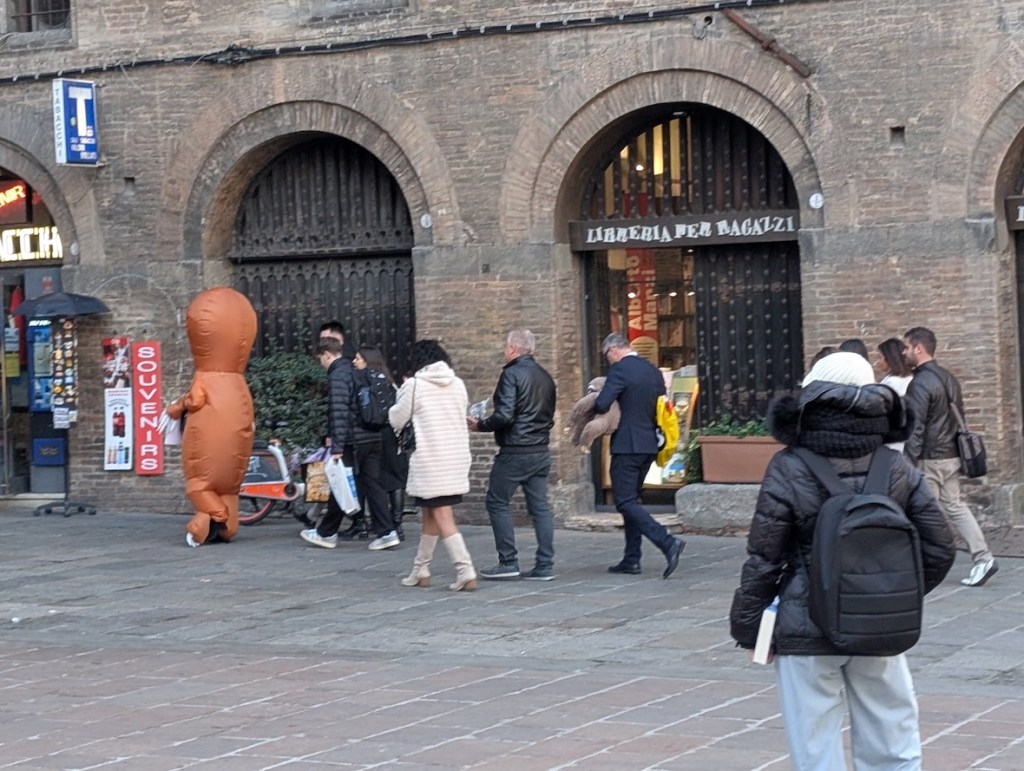
This encounter set the stage fairly well for my roughly 36 hours in Bologna. I wouldn’t go to the length of a Monty Python proclamation (“Let’s not go there – it’s a silly place”), but Bologna struck me as a city with an unexpected sense of humor. It felt, for lack of a better word, playful.
Perhaps that’s to be expected of a university town. Bologna can lay claim, perhaps to being the university town – there is debate about whether you count its founding as 1088, 1158 or somewhere in between, but the city’s Alma Mater Studiorum claims to be the oldest operating university in the world. It has the feel of Cambridge – either of the Cambridges – with a more traditional city wrapped around the outside.
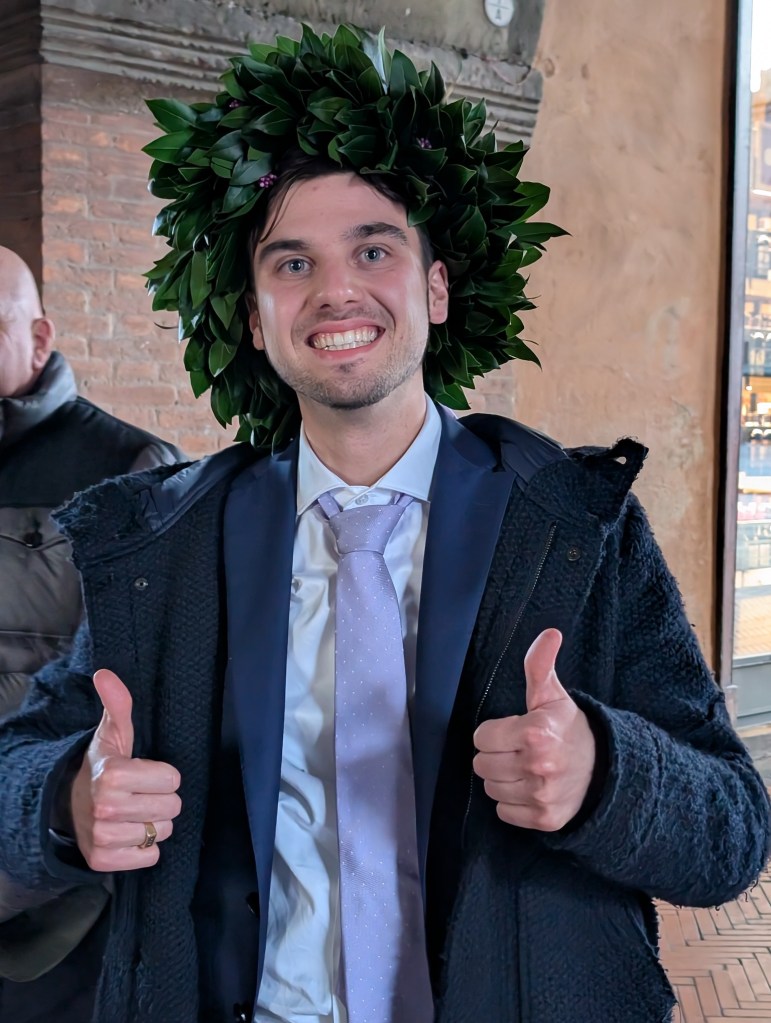
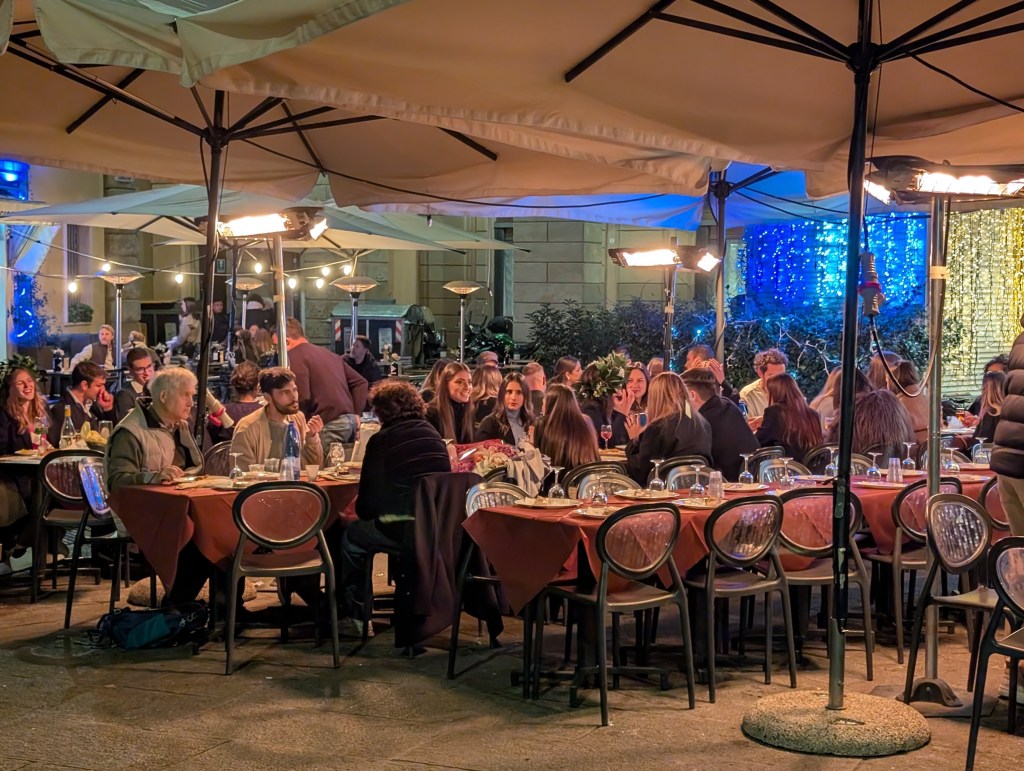
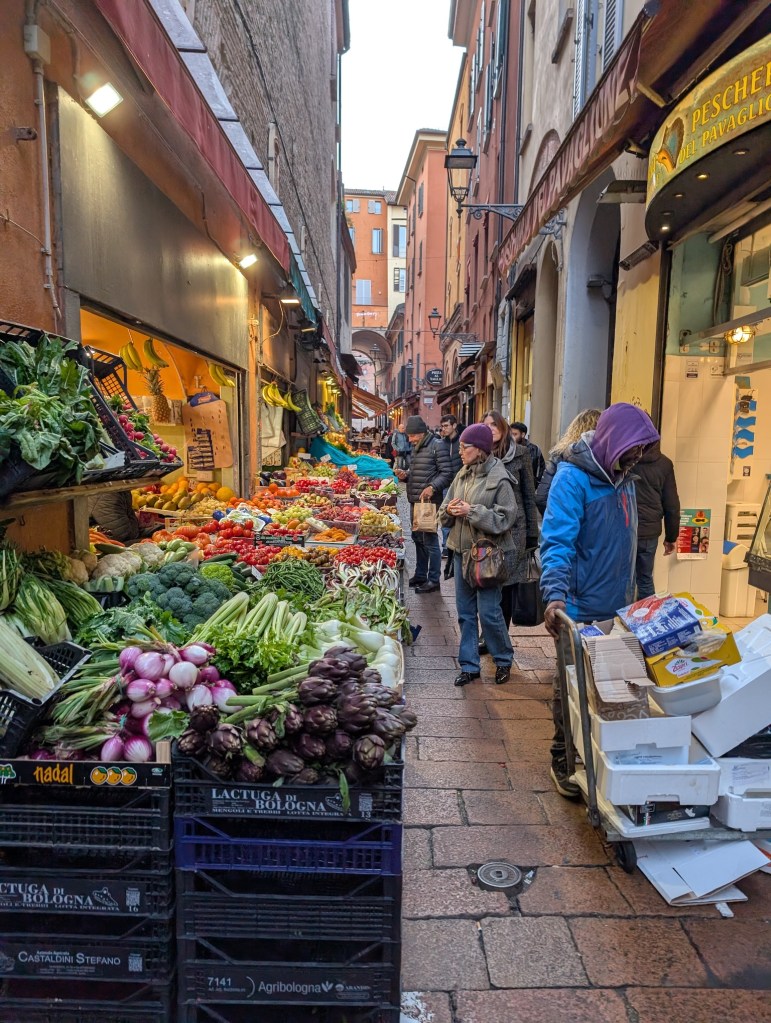
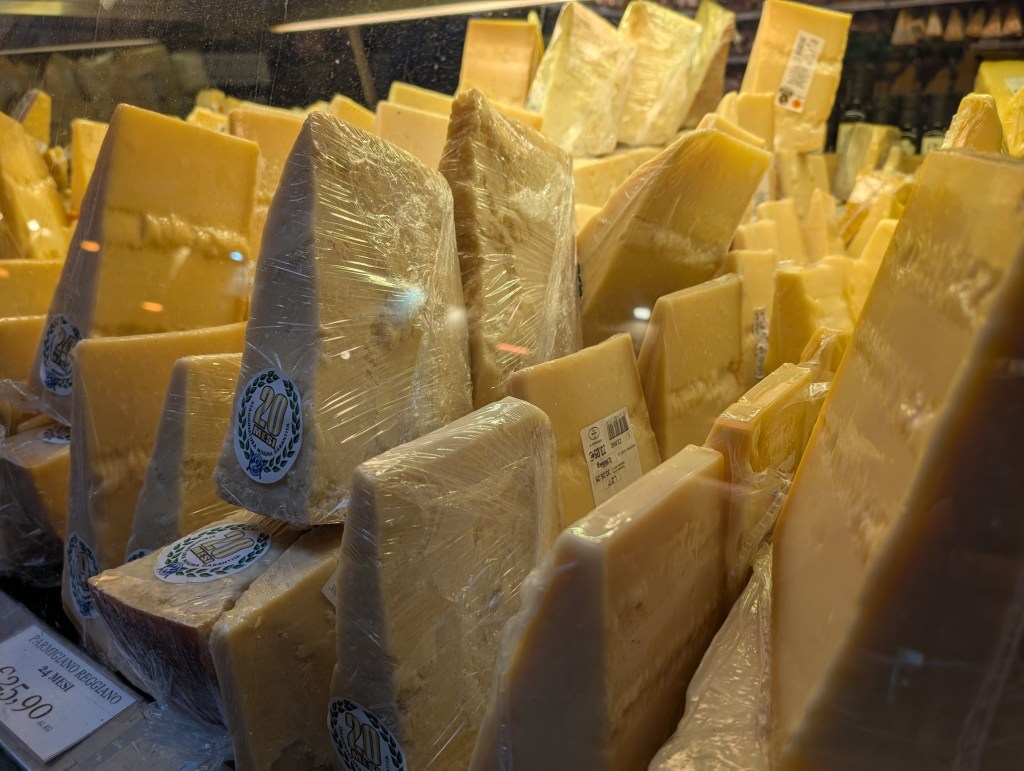
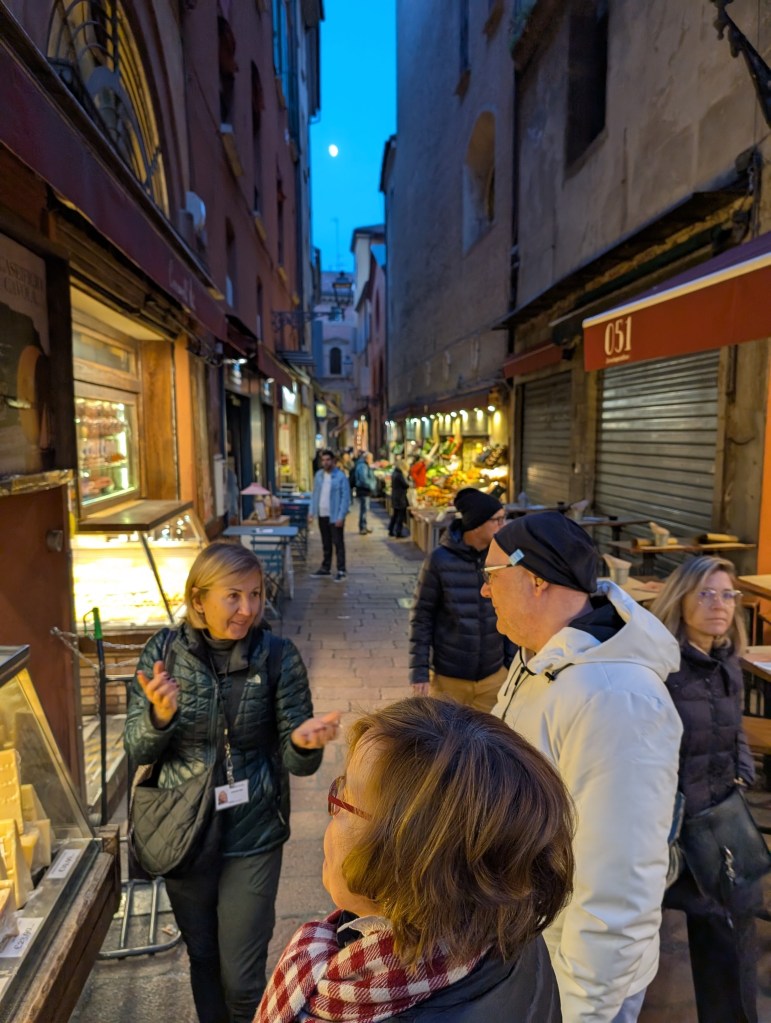
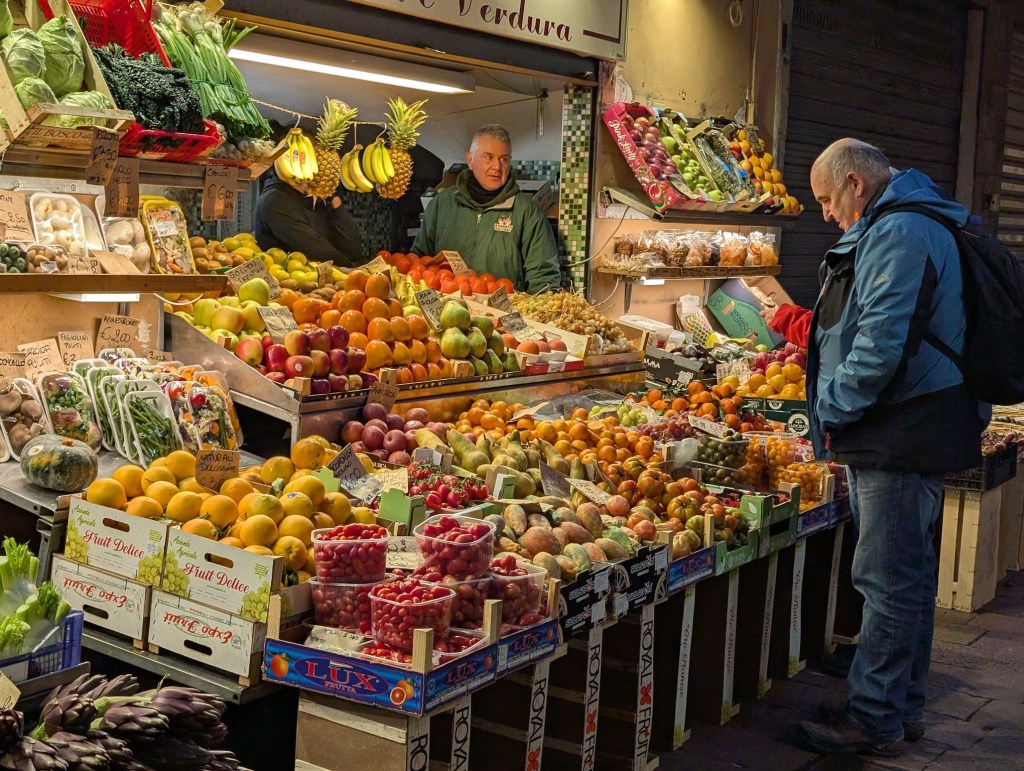
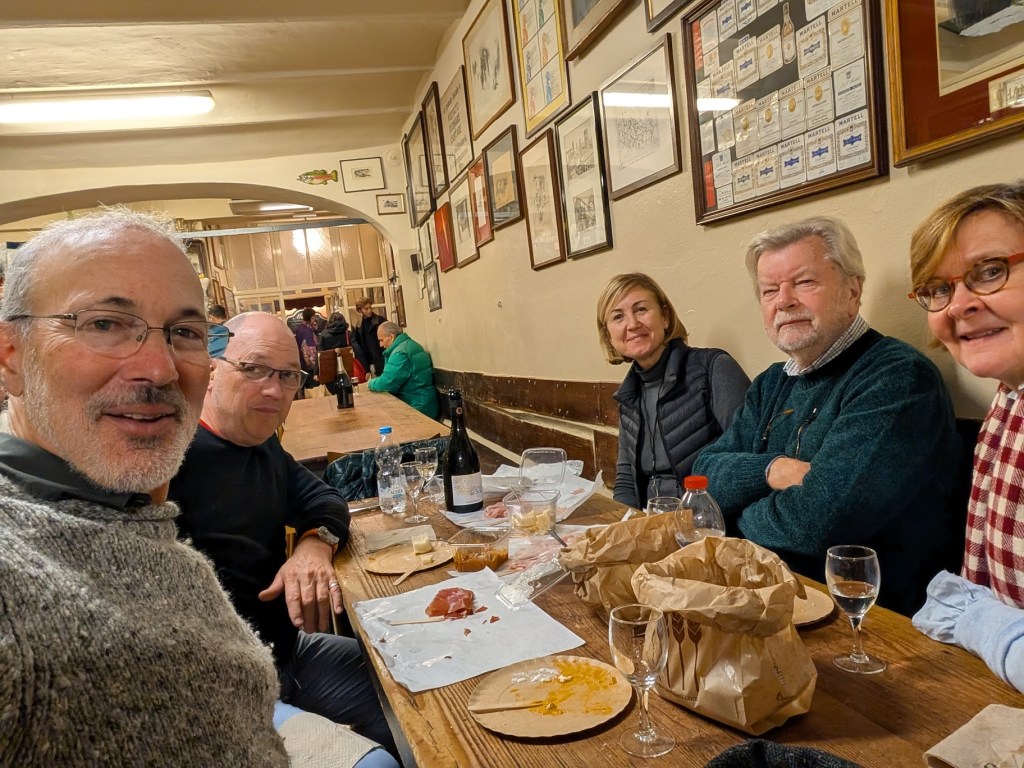
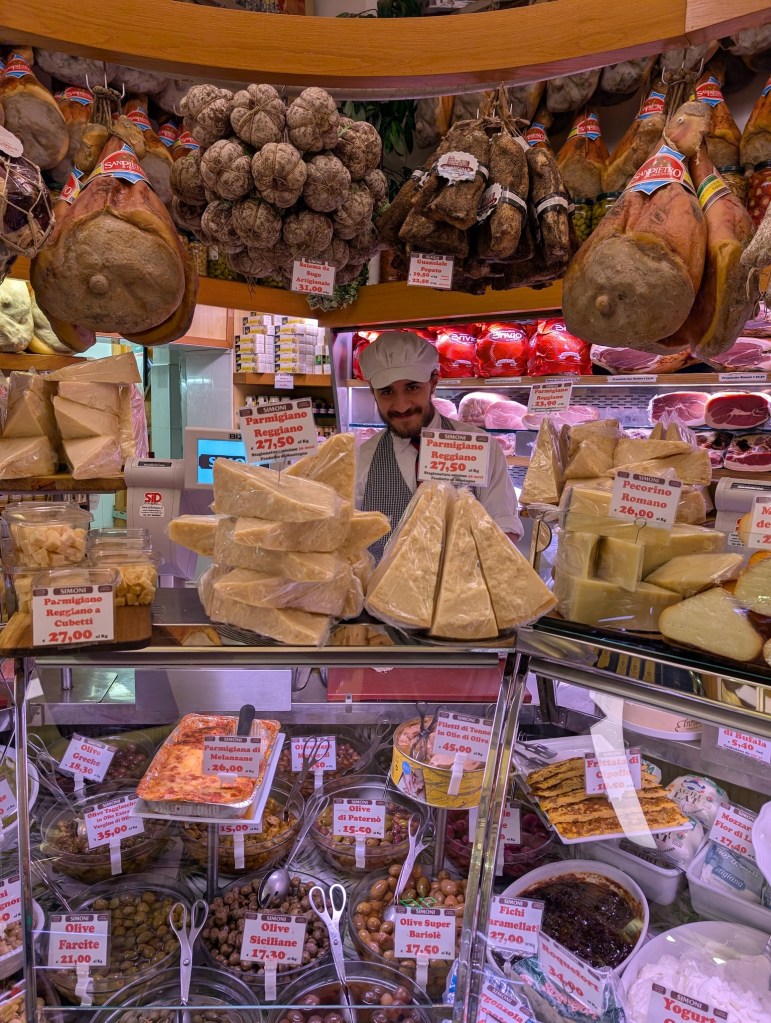
I managed to stick surprisingly well to my plan, even while indulging myself in the silliness of taking candy from strangers. I’d signed up for a “foodie tour” the evening of my arrival, and walked the narrow, market-stalled lanes of the Quadrilatero with Stefania, learning about and sampling local pastries, cured meats and cheeses with three other travelers (two Finns and one German).

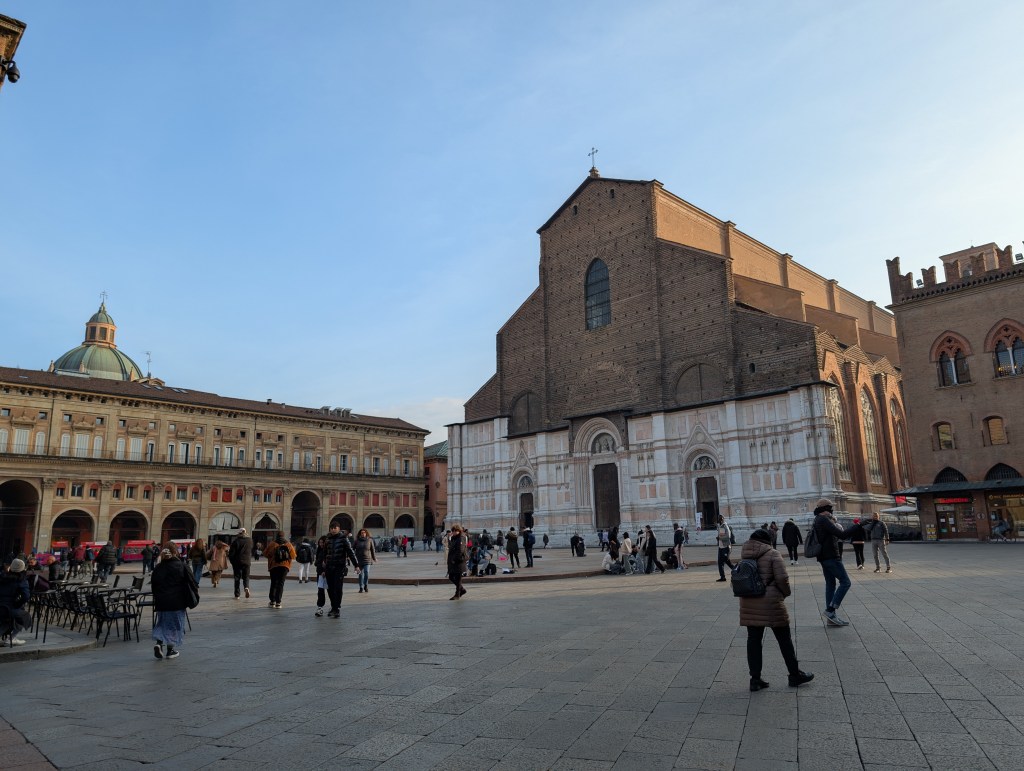
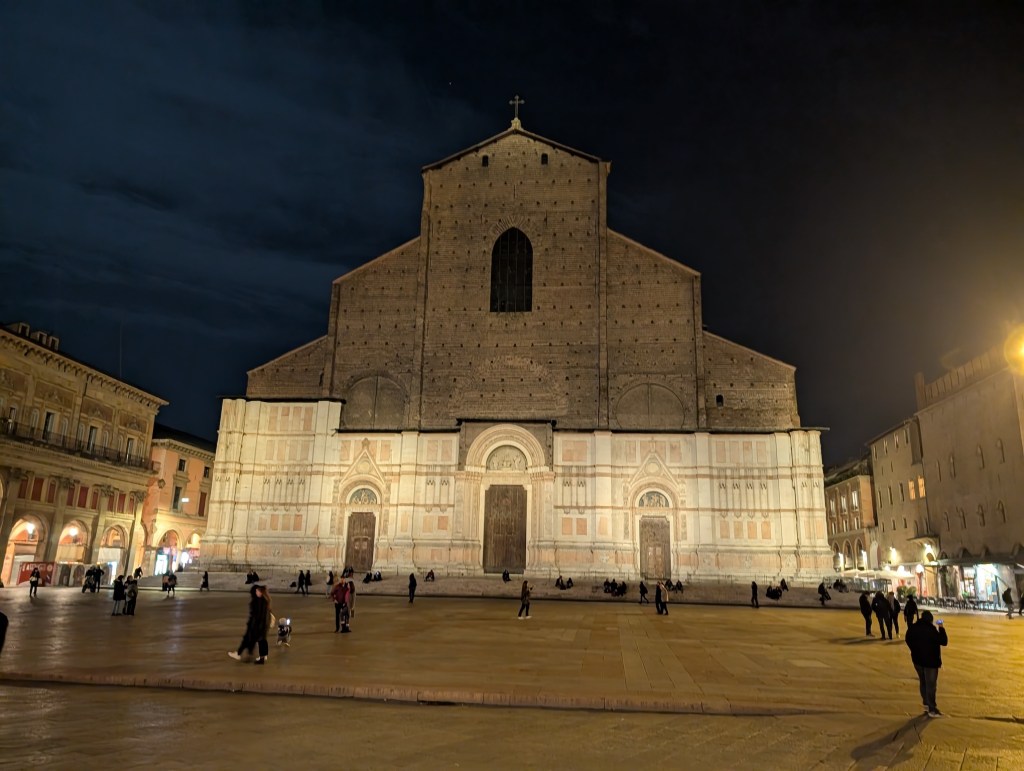
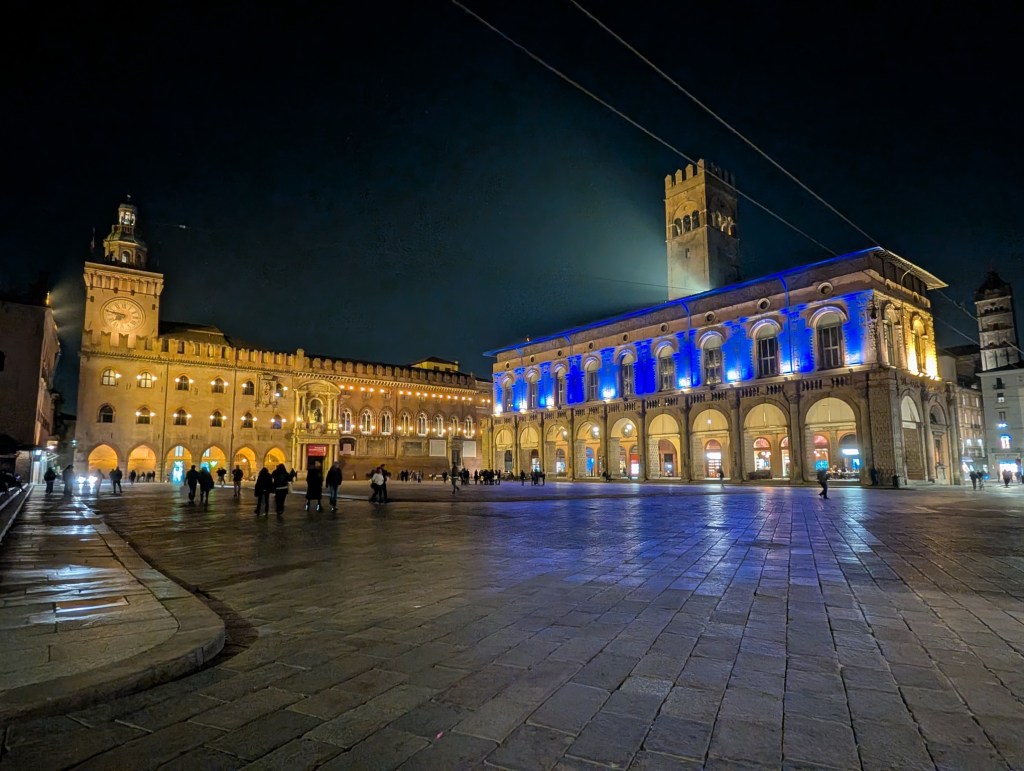
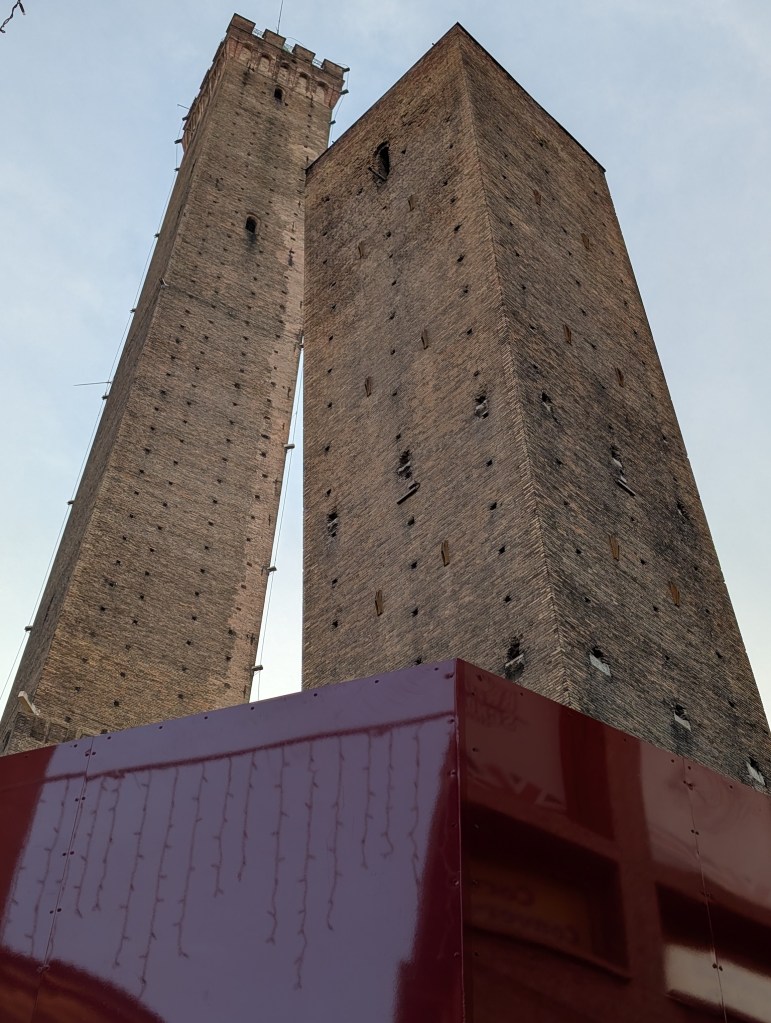
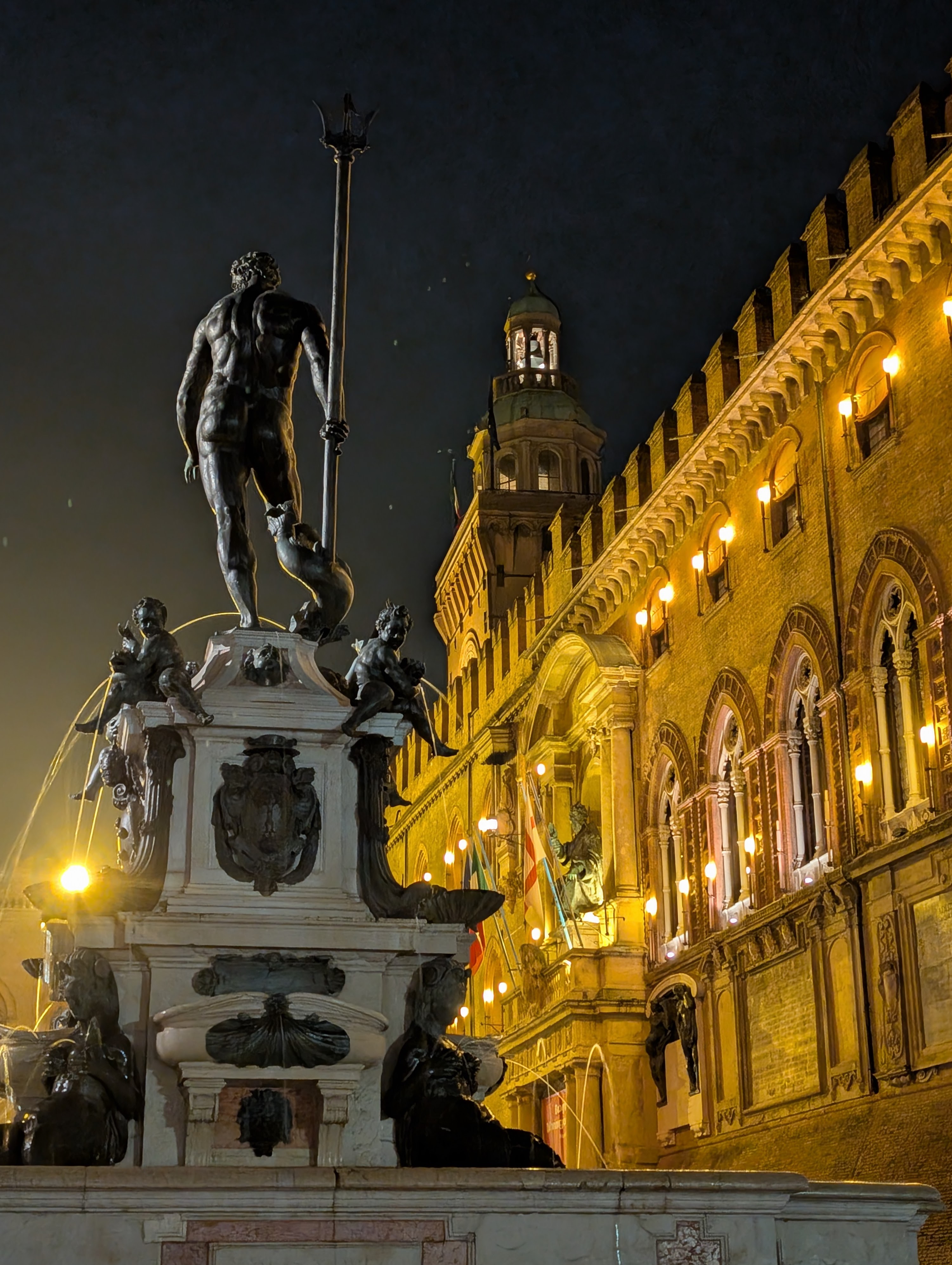
There were the obligatory stops at the Palazzo Maggiore – the central square – by day and night, and the city’s two iconic and photogenic leaning towers. The latter had been open for climbing until recently, when structural analysis revealed that at least one of them had reached “critical lean” and might require heroic efforts to prevent it from toppling altogether. Naturally, wild recriminations are flying left and right over who is to blame.

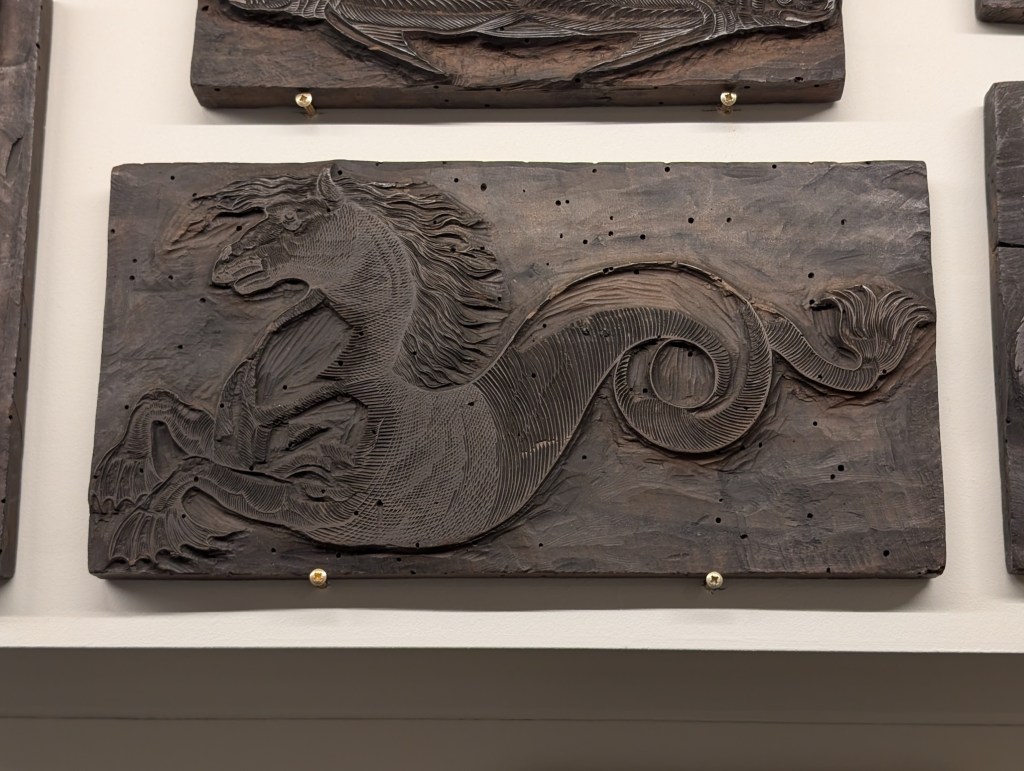
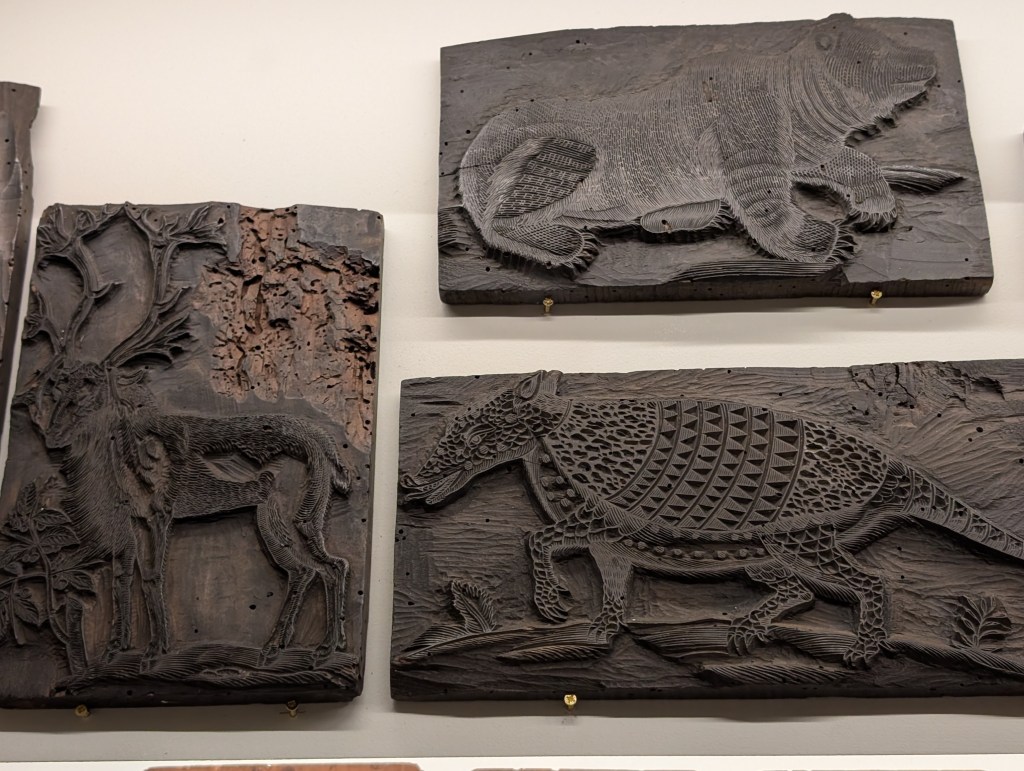
The museum: I’d mentioned a museum that Jim and Ducky insisted I visit, and I was not disappointed. Not hard for science geeks to recognize what will appeal to other science geeks. The Museo di Palazzo Poggi is hidden upstairs in one of the university buildings – I walked past it twice before having to ask. Once I did find it, I got pleasantly lost in one of the many exhibits: a collection of woodcut plates created and/or commissioned by Ulisse Androvandi, a 16th century naturalist who traveled the world while young, cataloging and illustrating “curiosities.” When his age no longer allowed travel, he corresponded with scholars studying the Old and New Worlds, bartering for specimens and creating one of the greatest collections of the age. He was also – according to the museum, at least – was the first to conclude that the best way to convey information about biological specimens was through detailed color illustrations, and commissioned an enormous number of woodcut blocks so that those illustrations could be easily reproduced and distributed. He was also apparently a stickler for detail and rejected illustrations that were “stylistic” at the expense of accuracy. One of the museum’s projects is digitizing 3D models of the original blocks, so as to digitally undo the 500 years of warping and degradation.

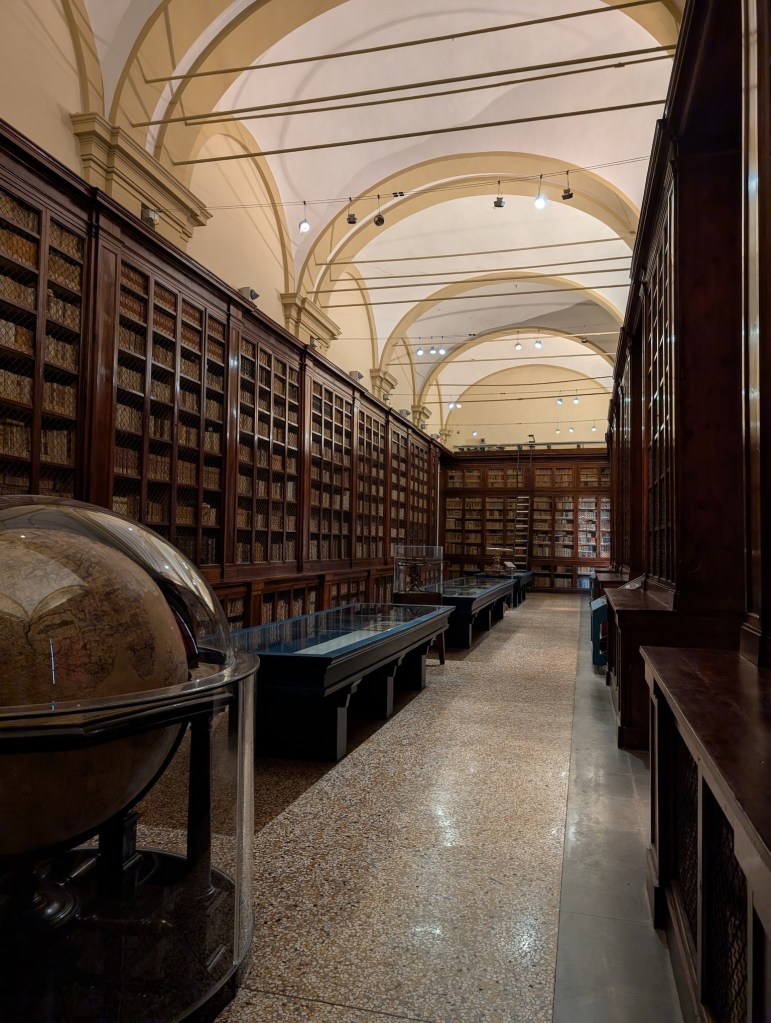

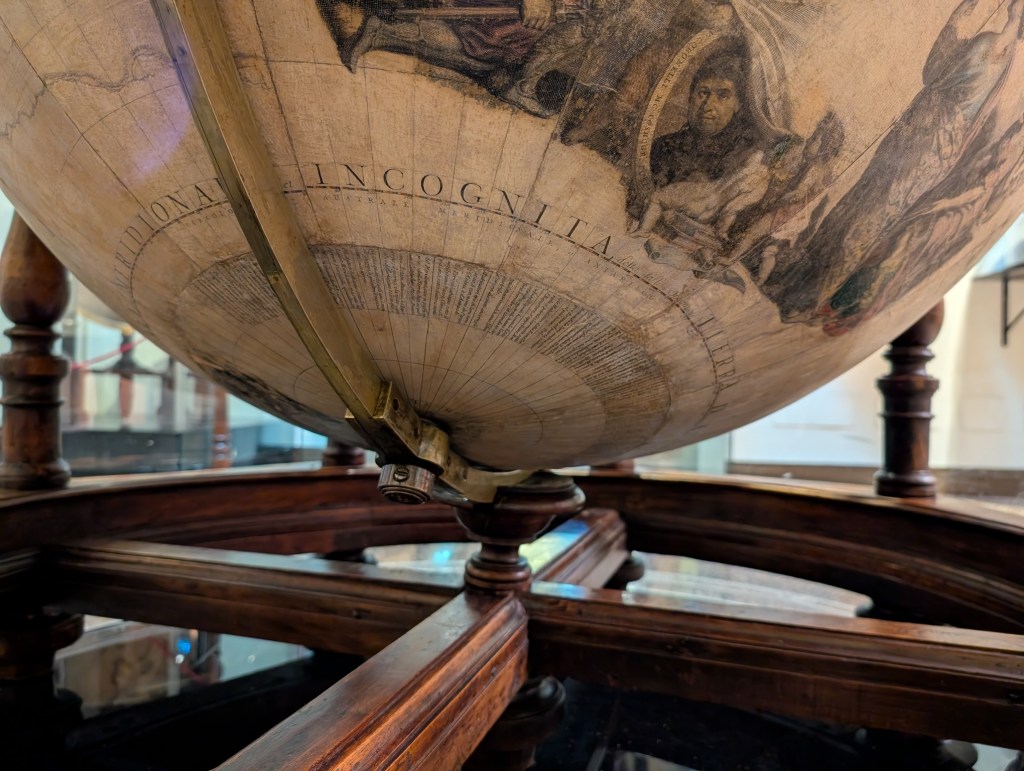
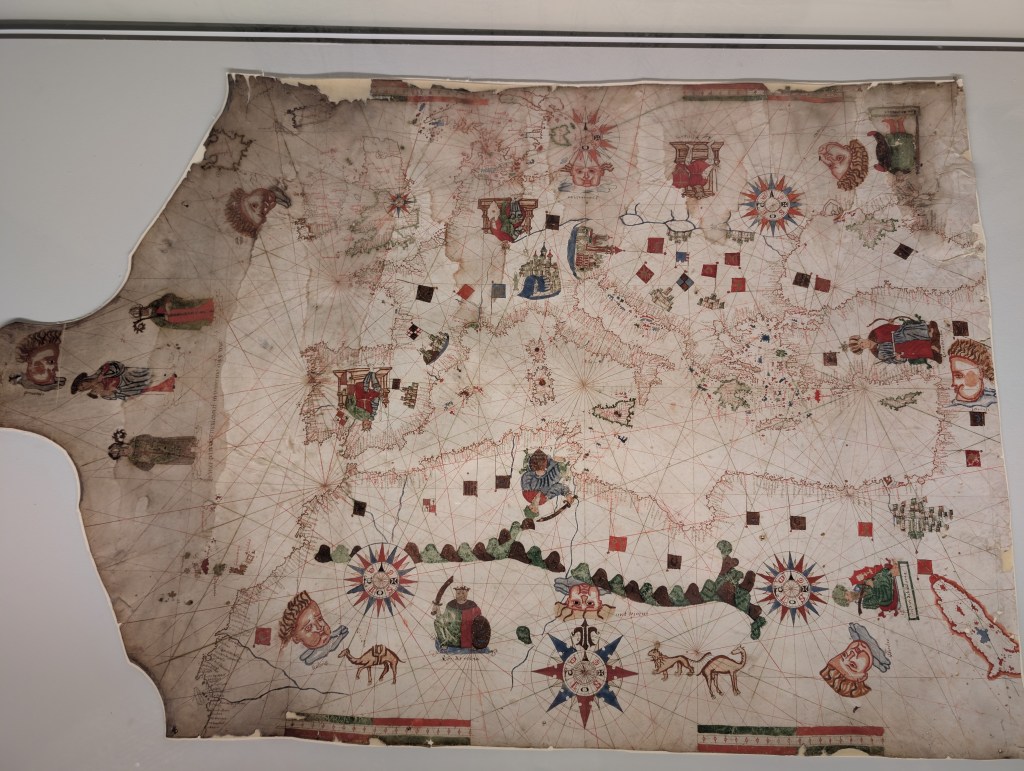
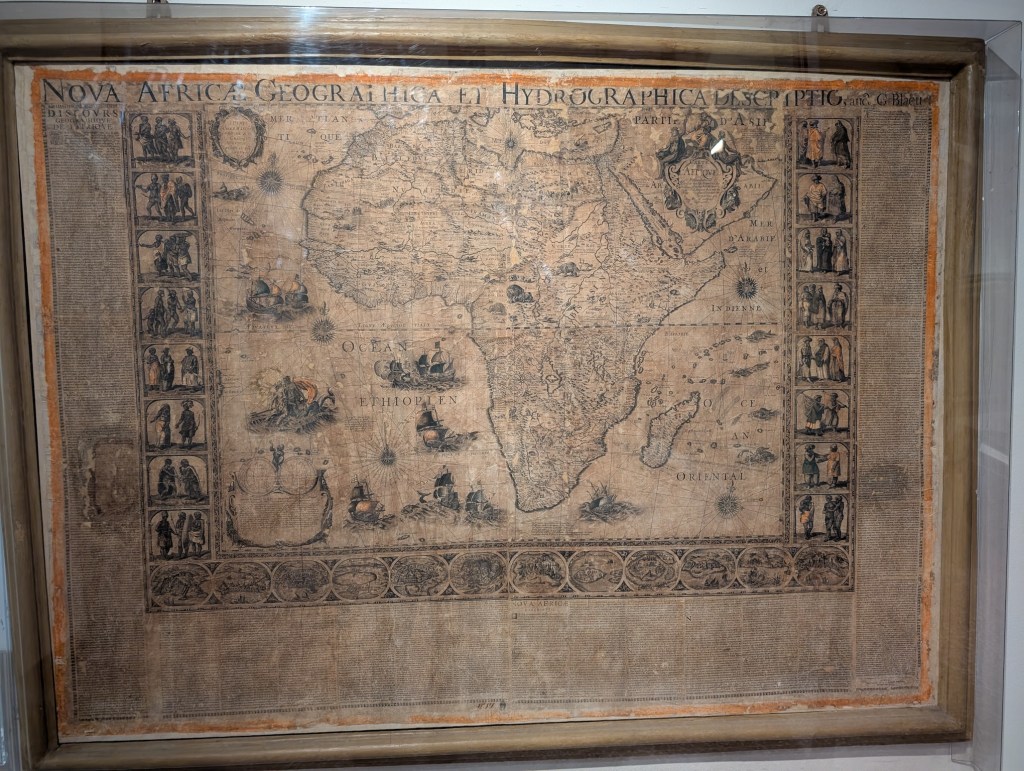
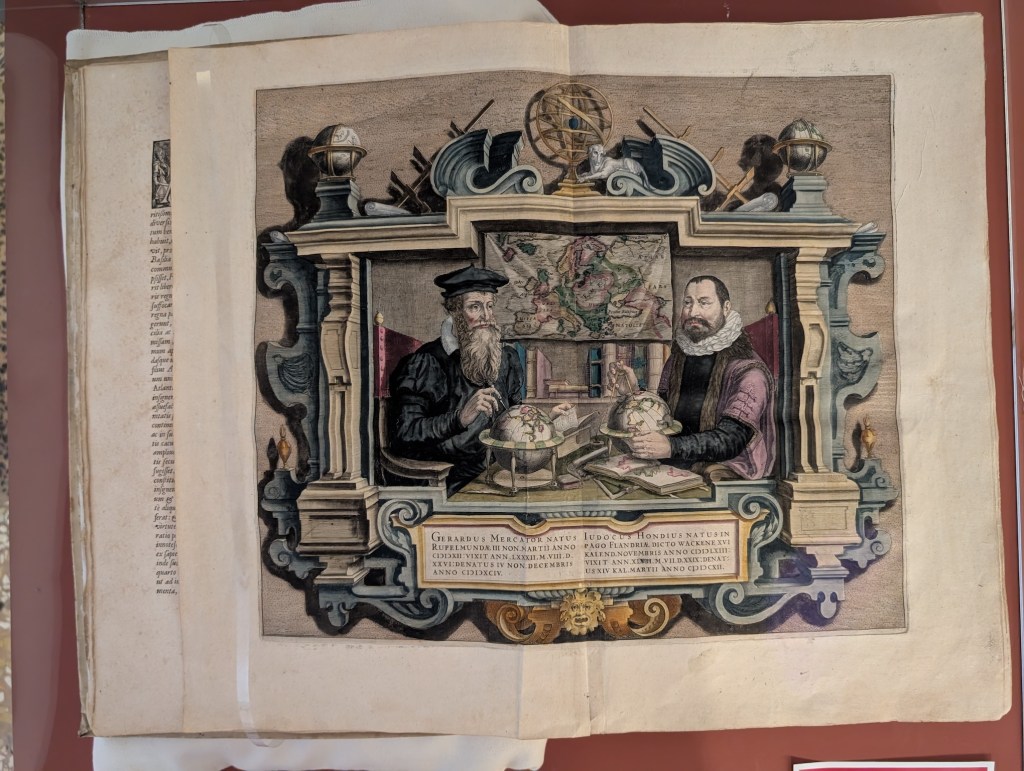
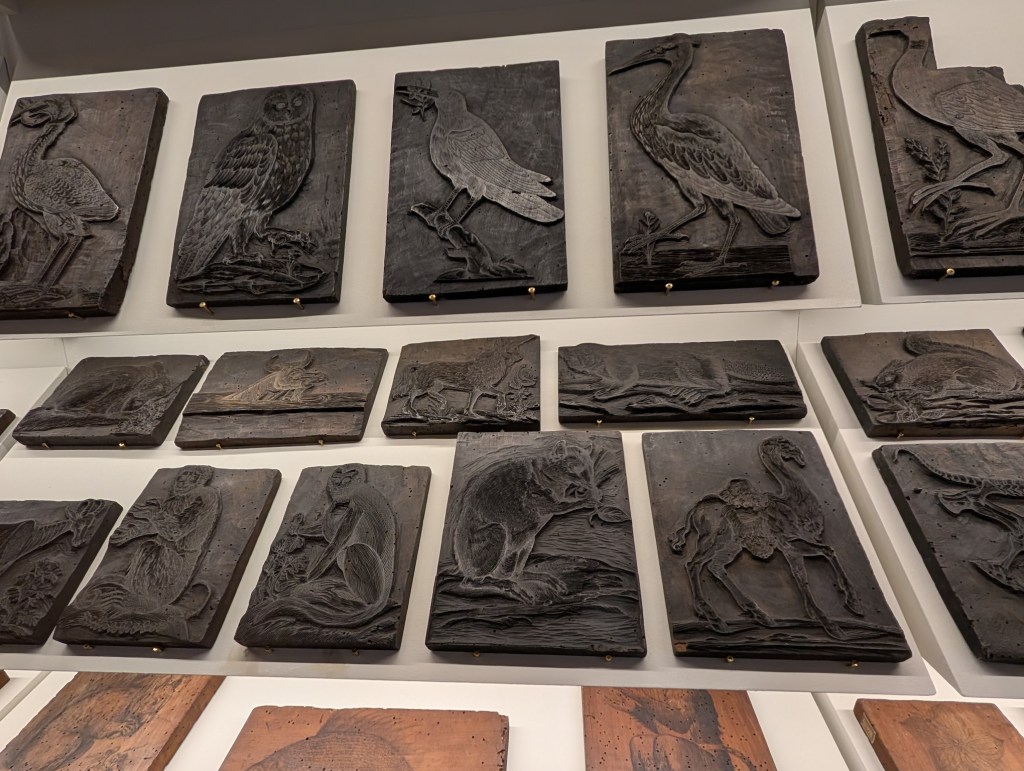
There was also the library, the map room, the “military architecture” room and…well, let’s just call it “the baby room,” with walls and walls of 18th century life-sized wax models of everything that can go wrong with pregnancy and childbirth.
What else was there? Not much – two dinners, a museum or two and a bunch of walking. Good times. Looking forward to coming back when I get the chance.
 David Pablo Cohn