
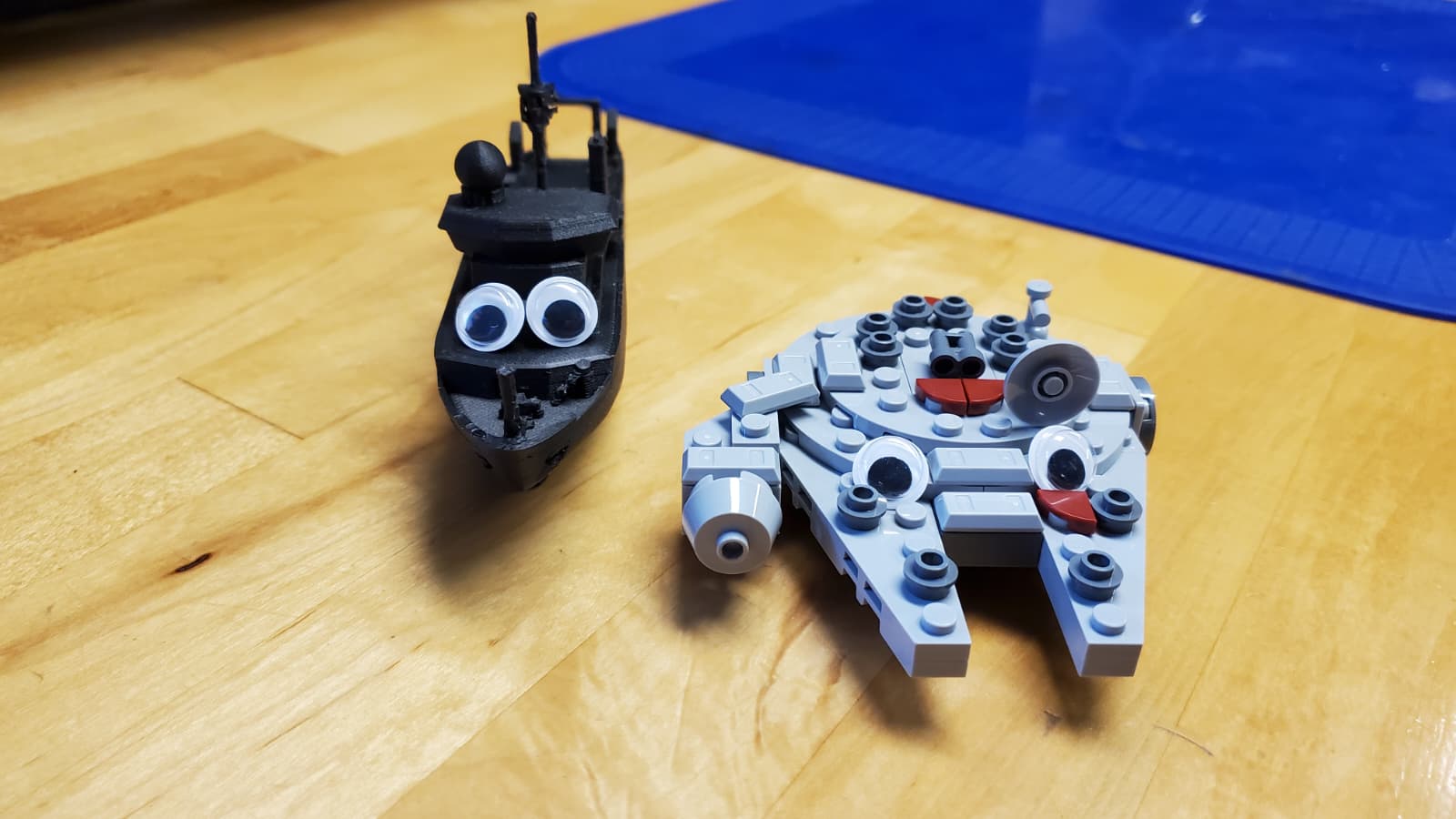
I have in my notes that Hegel wrote that; I’m sure I could chase it down if I wanted, but the sentiment is enough, and it has been playing true for the past few days.
I can’t emphasize enough how generous the ship’s officers and regular crew have been with their time and forbearance as we greenhorns stumble around their home at sea, leaving stuff where passageways need to remain clear and showing up at the wrong time for everything. Engineers and bridge crew always seem happy to talk, even when I’ve belatedly discovered that they were at the end of a long watch and would really like to make it to mess before it closes (“Mind if we head down while we chat?”). The kitchen staff – Kim, Evan and Robin – have kept us better fed with gastronomic temptations than some high-end corporate retreats I’ve been on.


And the seas have been – it’s okay that I’m writing this, because I already know that there’s snotty weather ahead – remarkably placid, with the fabled fair winds and a following sea. So I’ve been able to actually enjoy the delicacies that Kim and her team have been preparing for us.

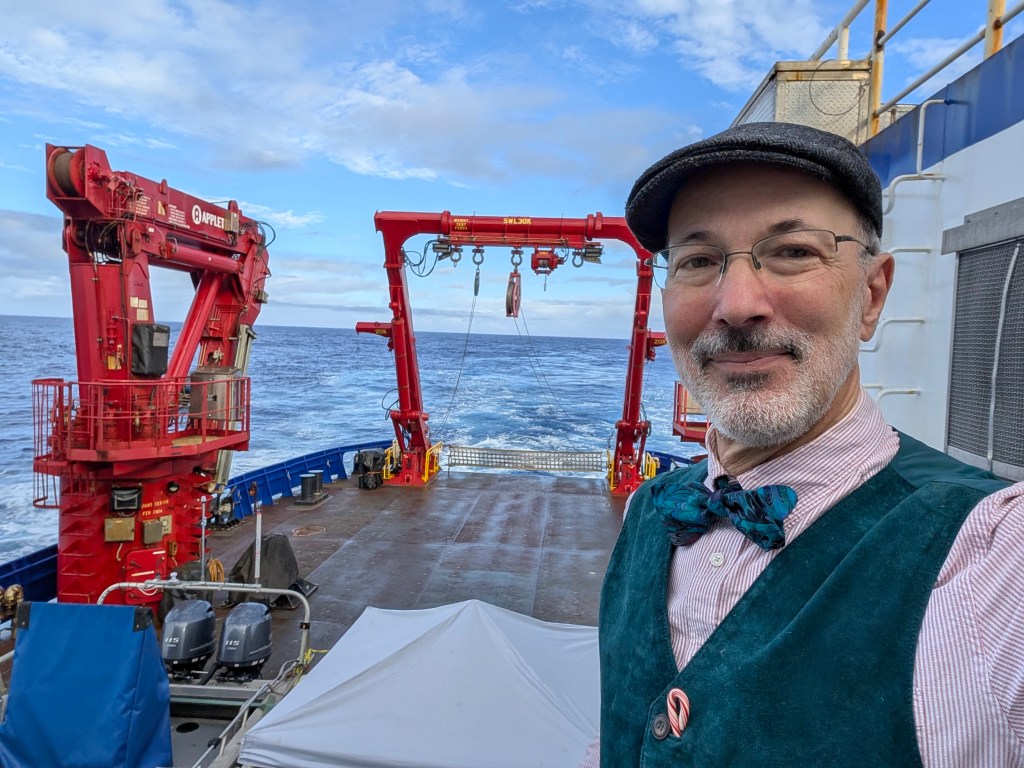
We had a quiet Christmas at sea, unlike some others of the past, with candy cane surprises left by an elfish marine tech (You’re the best, Amy!), some dress up, a Yankee Swap, a couple of fine meals, and a couple of rounds of Bananagrams. Okay, about fifty rounds, each one “going to be the last,” because we were all kind of startled at how fast Robin, Lily and Rita could throw jawbreaker words together out of dictionary soup. Then, drowsing away what remained of the holiday watching movies in the lounge.

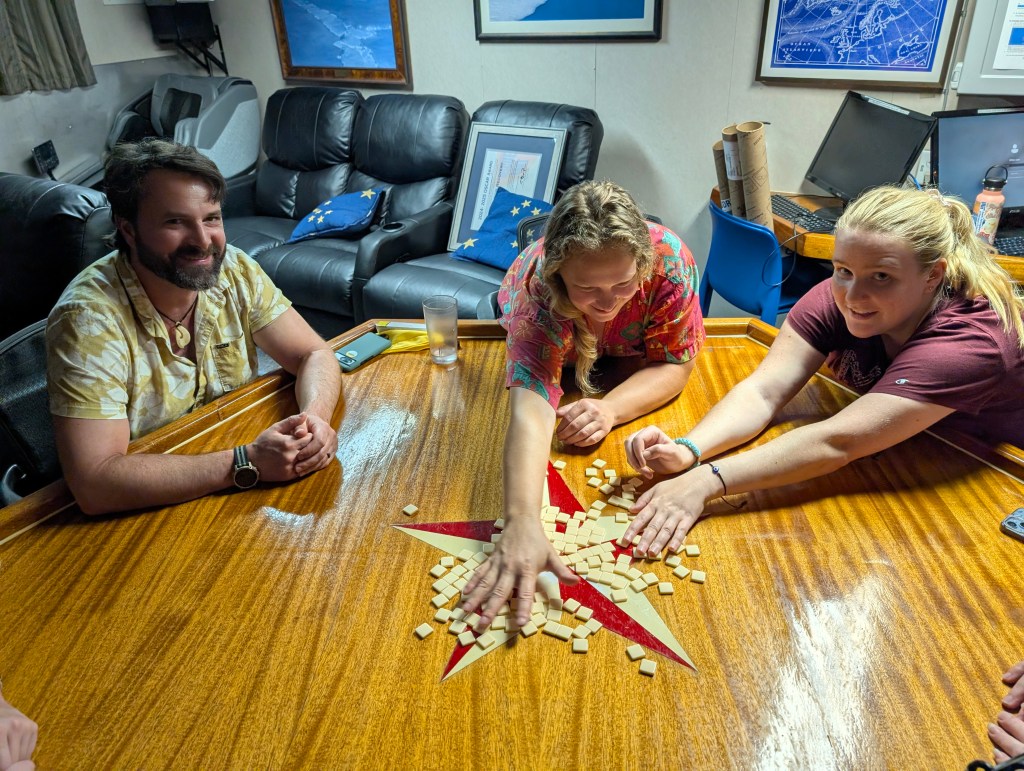
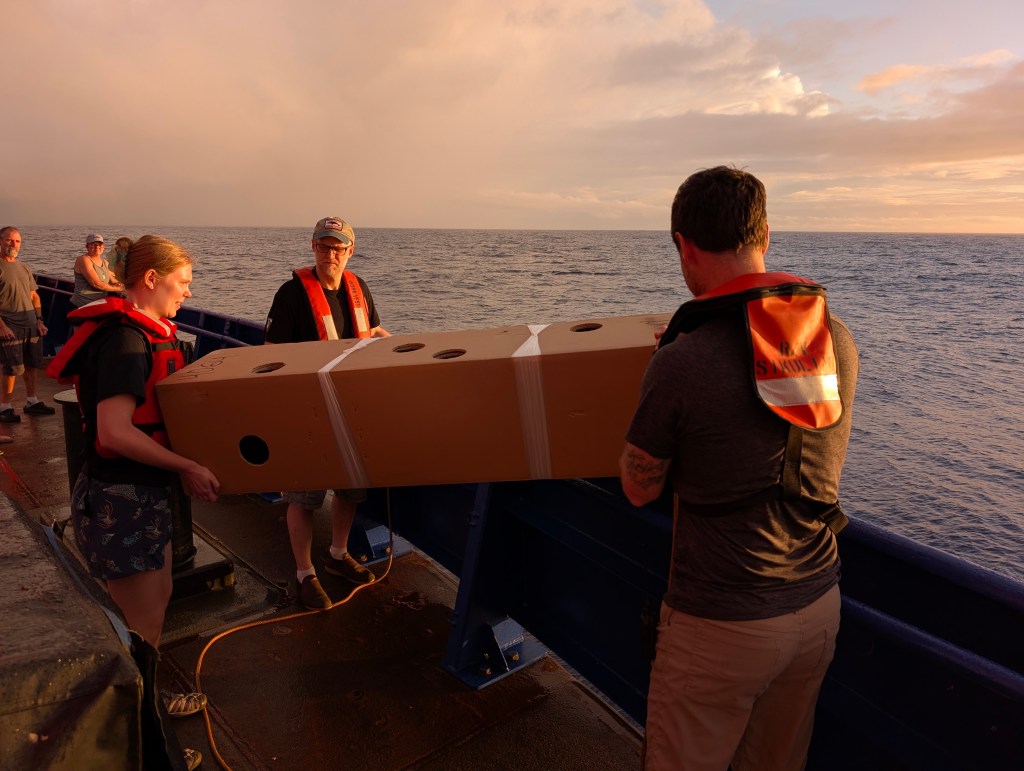
Which is not to say that we haven’t also been working. Free from other distractions, and with direct access to all the raw ship data I can chew. I’ve made tons and tons of progress. Genevieve, Lily and Julian are all churning away at their own projects, but we’ve taken breaks to help the marine techs launch a couple of Argo floats whenever it’s time to, as the vernacular goes, “throw some science over the side.”*
*(I think it was at South Pole that I first heard “science” used as a mass noun: “What’s that pounding noise?” “Oh, I think they’re nailing some more science to the roof…”)
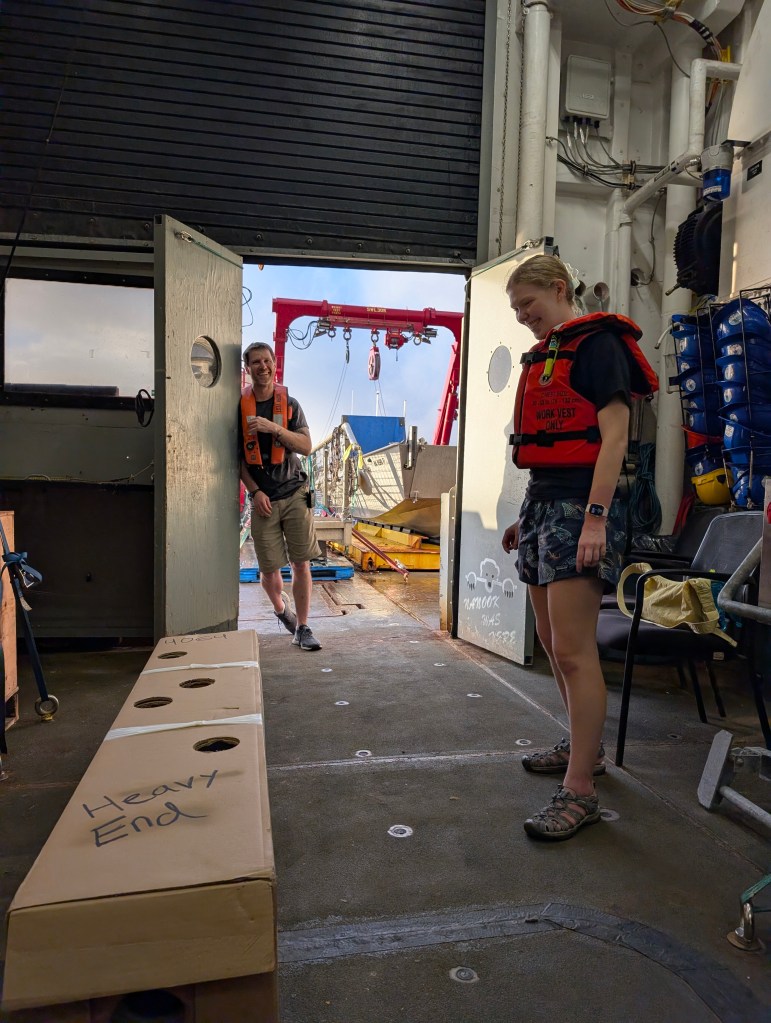
But it’s not only the chronicling pages of these days that are empty – it’s the sea around us as well. Sitting on the forward 02 deck for an hour or so just watching the immensity of the sea keep going by can make you feel comfortable with your smallness in the grand scheme of things. Even more so when you realize that in that hour you’ve traversed less than 0.2% of the distance we have to travel. Then take into account the size of the ocean itself. If you stood watch for every one of those hours, day and night, and could see five miles in all directions – yes, even at night – you would have observed (checks math with ChatGPT) less than 0.09 % of this ocean. I’m not even going to lean into the Pale Blue Dot and the distance between galaxies – you get the idea.

The ocean is unimaginably vast and, for me, that vastness brings a comfort, a sense of peace. I get wrapped up in my own little world: my code is misbehaving, or I’m arguing with city officials over whose definition of “wetland” they’re using, or, or, or… You know.
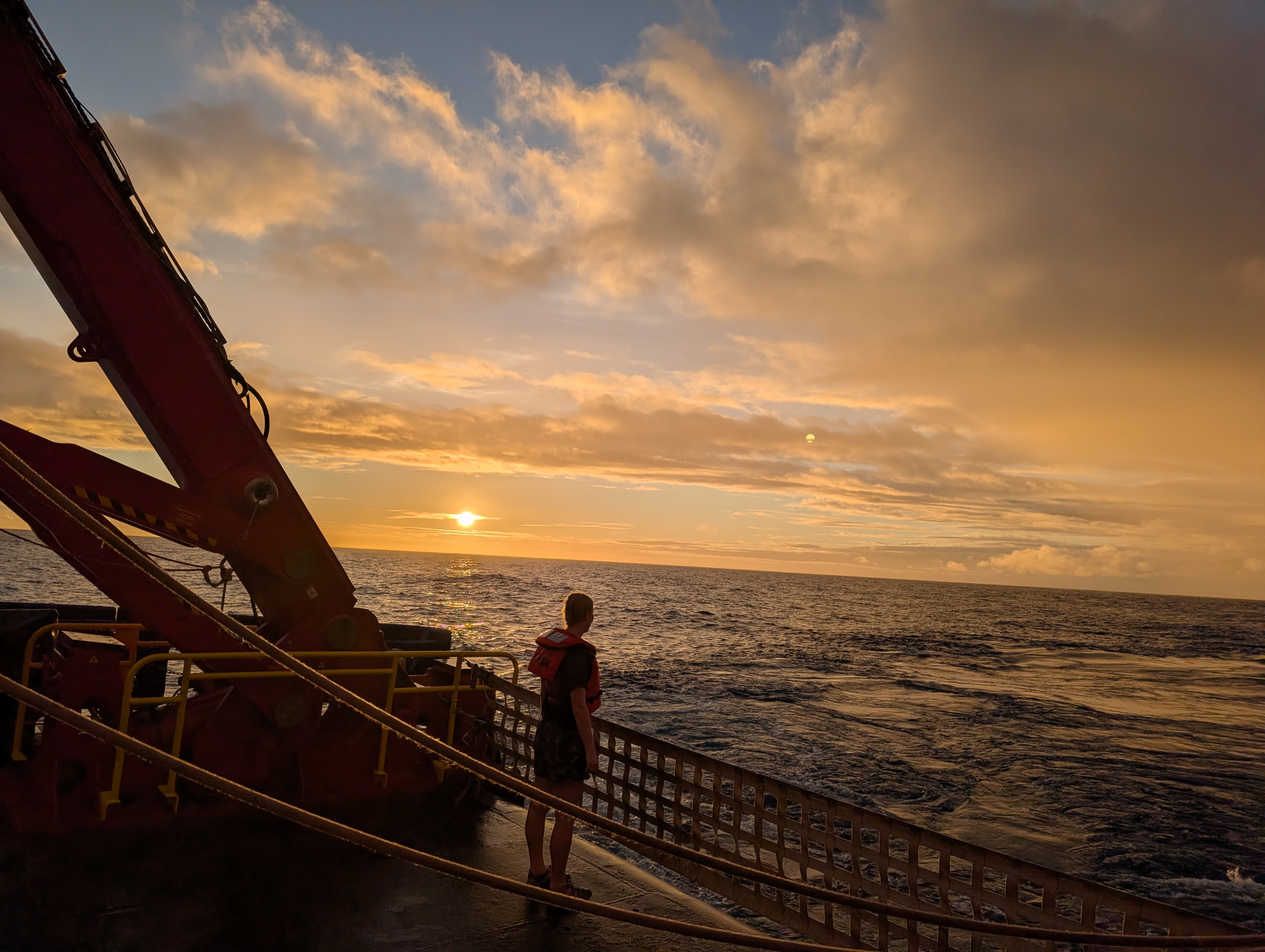
Then I take a breath, slide back from the computer, clamber up to the 02 deck and sit on what’s known as Woody’s Bench. I watch the sea go by and I remember how small my problems are, and how big and beautiful the universe is. How lucky I am to just be a part of it right now. And that brings me a little more happiness.
 David Pablo Cohn
I’m in the middle of re-reading James Zug’s *outstanding* non-fiction book about John Ledyard and his incredible travels through the late 18th century. By the middle of the book, Ledyard has just returned to London after **four years** circling the globe as part of Captain Cook’s third circumnavigation expedition, during which (among many other things) they were the first Europeans to encounter Hawaii, and Ledyard was the first American citizen to see the west coast of North America. The vastness of the Pacific, as they traverse from south of Polynesia to north of the Bering Strait (twice), encountering all the indigenous peoples along the way, comes through clearly. Ledyard wrote one of the definitive books about Cook’s ill-fated voyage (and apparently the only one who gave the story a more balanced treatment, not treating Cook as infallible hero.) He went on to become famous in his own time, mixing with all the major historical figures of his day from America to Europe to Russia and beyond. I highly recommend Zug’s book to anyone who enjoys history, especially of the Age of Exploration. But it is especially enjoyable to us as Dartmouth alumni, for John Ledyard is best known to us as a dropout from the class of ’76. The class of 1776, that is! https://www.amazon.com/American-Traveler-Adventures-Ledyard-Dreamed/dp/0465094058
LikeLiked by 1 person
Thank you for this reminder! Seems to be out of print, but I’ve ordered a used copy from Alibris.com, and it will be waiting for me in Palo Alto during my convalescence.
LikeLike
Beautifully said and beautifully sung with an Irish accent no less. Glad all is well at sea.
Hope you continue to have a wonderful, soothing trip.
Happy New Year,
Marilyn
LikeLiked by 1 person
I can’t resist:
“The History of the World is not the theatre of happiness. Periods of happiness are blank pages in it, for they are periods of harmony — periods when the antithesis is in abeyance.”
— G.W.F. Hegel, The Philosophy of History, p. 41.
First edition was in 1837, but there were others. The link above goes to a modern translation, but I’m not sure which edition was the source.
LikeLike
I didn’t *intend* it as Weekend Editor bait, but I’m pleased as anything that you took the hook and delivered – thank you!
LikeLike