
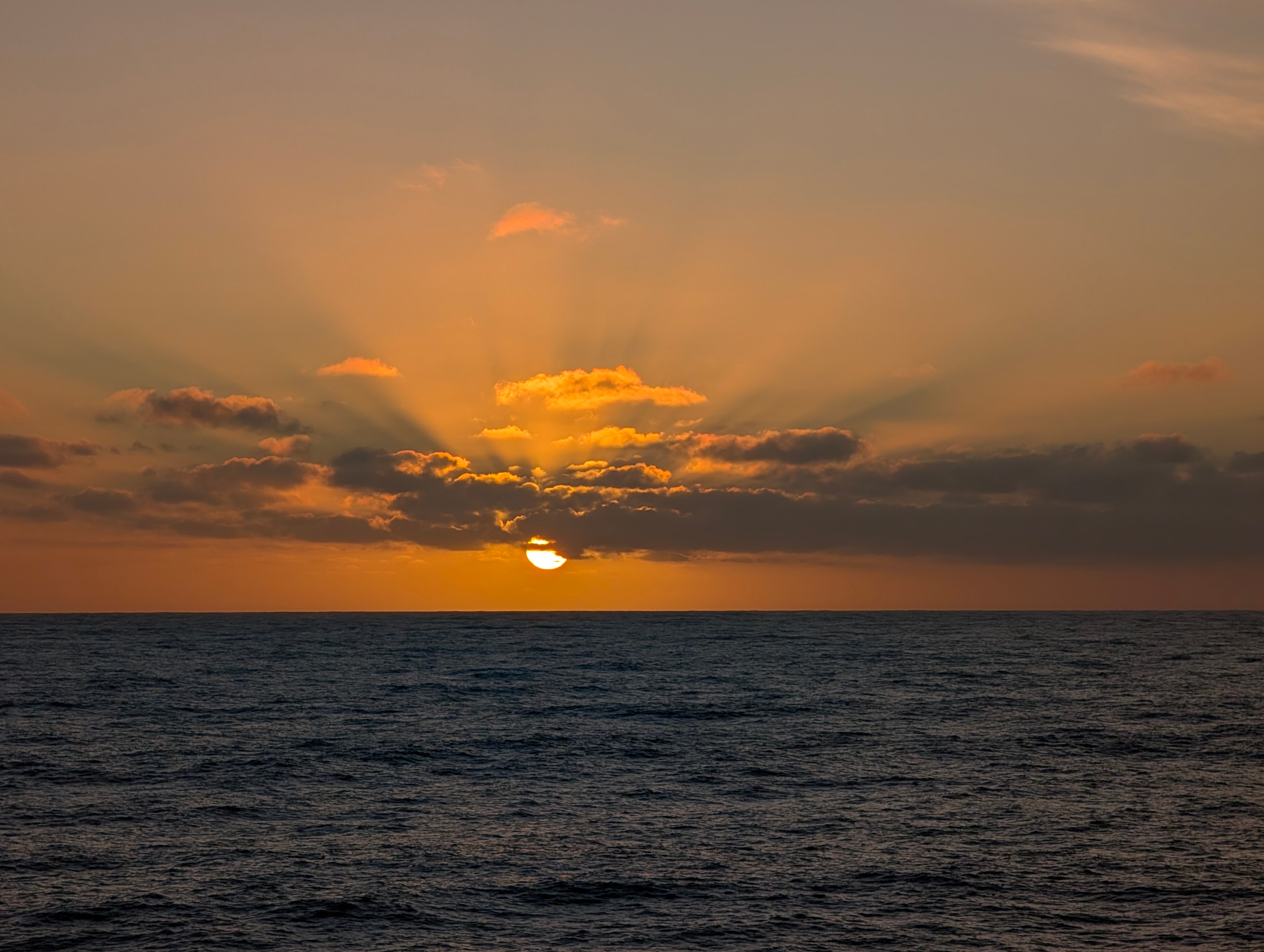
There were two flashes of light at dusk last night that defined the moment for me.
The first was – yes, at almost 63 years, I have finally seen “the green flash.” I’d been warned that it would be subtle, ephemeral, almost liminal. That I might not be sure I’d seen it.
But as the sun sank oh so imperceptibly to the horizon – at higher latitudes it can take forever to drop below the horizon – those of us who have developed the habit of hanging out on the bridge after mess were treated to a lovely, almost Caribbean sunset.
Amy was getting ready to head below for her rounds (unlike me and Genevieve, she was actually on watch, working). But our third mate Clay (also on duty) suggested she hang out just a couple of minutes more – “Might be a green flash,” he said, and nodded his head toward the luminous interplay of sun, water and cloud behind us.
None of the other three of us had ever seen one, and we burned a couple of minutes of idle conversation speculating how it was clearly a cult delusion, or a massive in-joke, like those “snipe hunts” they used to foist off on us as kids at summer camp. But Amy waited anyway, and we all went out on the bridge deck to watch the last limb of the fiery limb of the sun’s disk drop into the sea.
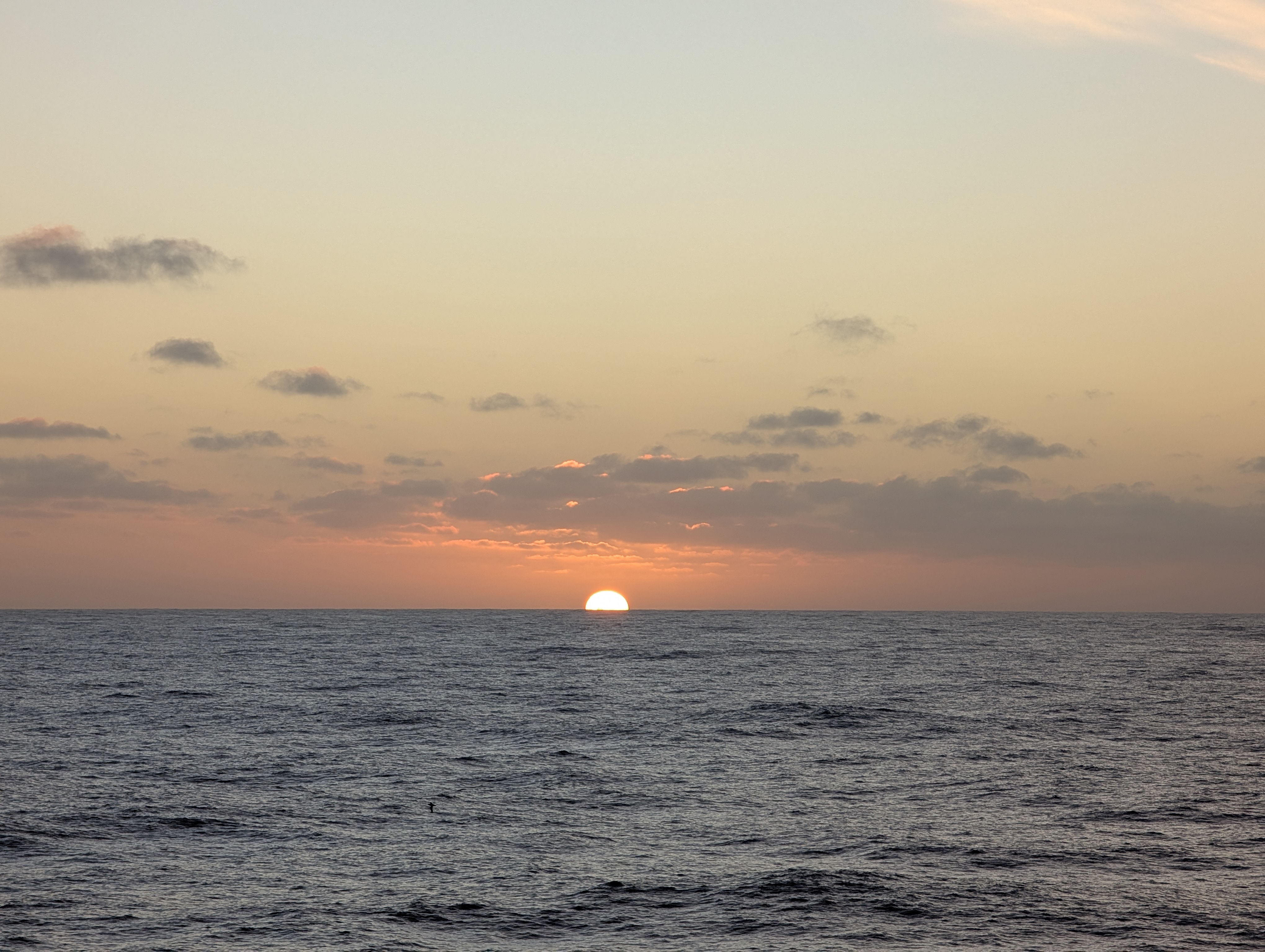
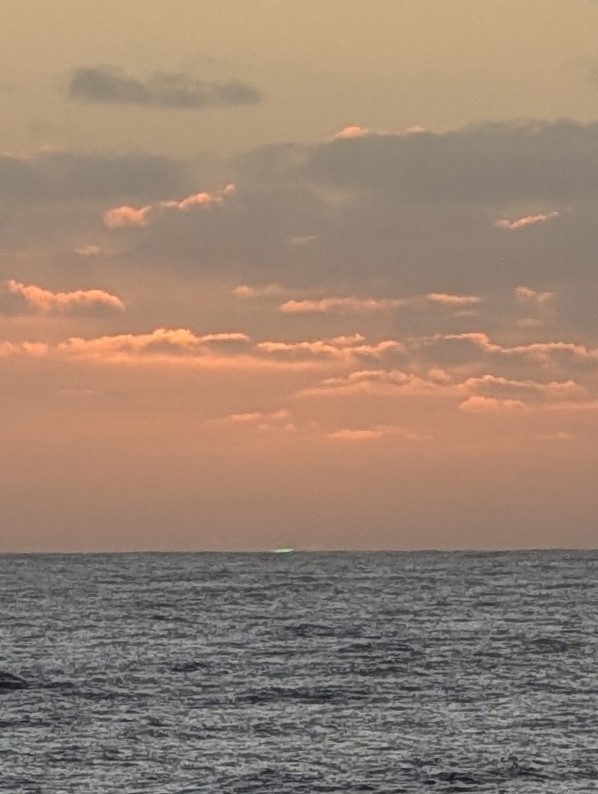
And then, a moment later? Boop! A little pale-but-electric-green lentil popped up and illuminated the spot where the sun had gone. It was there long enough for me to pull my phone out and snap a bad picture, and then, sinking, mushroomed up into a miniature Fata Morgana mushroom cloud of green, lingered for another moment, and then was gone.
We looked at each other, gobsmacked, and exchanged high fives. “Told ya,” said Clay nonchalantly. Though he did admit that it was one of the better ones he’d seen, and we couldn’t help noticing that he’d taken his big-lens camera out of the case and snapped approximately seven billion pics of the sequence.
It was past eleven by then, and still not dark. But the southern sky was clear in a way it hadn’t been since I arrived in Tahiti three weeks ago. And you know the song, right? Yeah, I’ve seen the Southern Cross plenty of times, but still, to come all this way and not again?
I figured I’d stay up a little longer. Clay came off watch, replaced by Ian and Dylan. Canopus and Sirius came out faintly overhead, but I kept my eyes peeled to the southeast for the first glimmering of the upside-down kite, rising.
And then, from right about where I had expected to see the constellation, there was a brief, concentrated point of white light. Came on smoothly, lingered for perhaps a full second, and was gone by the time my call out to Ian got him looking in the right direction. Satellite flare? An aircraft landing light, as it turned briefly in our direction?
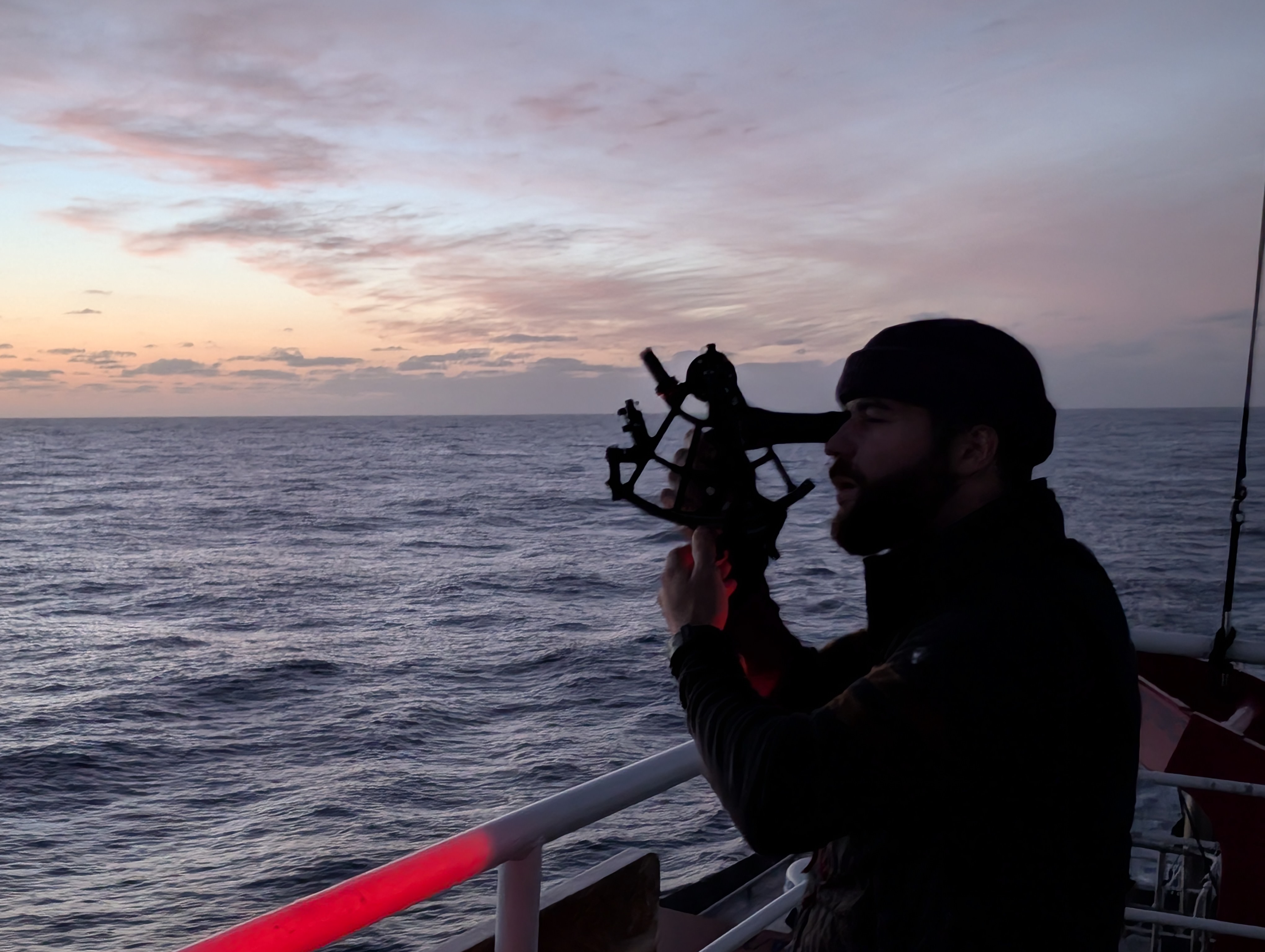
It was unmistakably a man-made phenomenon, and it occurred to me that it was the first such “sign from beyond” that we’d had since the coastline of Tahiti receded off our stern late last month. Internet aside, it was the first concrete sign that we, the ship that contained our physical world, the endless sea and sky (okay, and some birds), weren’t the only thing that still existed.
Which brought me back to the Anacharsis quotation that I love and find truth in:
“There are three kinds of people – those dead, those alive, and those at sea.”
I’ve come to appreciate that the sea is a sort of bardo we depart into when going to sea, apart from the normal world of the living. These days – more than in Anacharsis’ time – the expectation is that we will re-emerge into the world of the living when time comes, rather than continue on to that next state. But even in this modern, or even post-modern world, being at sea is different from being alive in the traditional way we think of things. And the transition back is not without some unsettling, and a sense of loss amid the joy of return to land and the land of the living.
If the miracles of GPS do not deceive us, we will make landfall this afternoon, expecting our first sighting at Cabo Pilar in about five hours. Then into the labyrinth that guards the western reaches of the Strait of Magellan by nightfall. Morning should have us past Cape Froward and turning north to where Punta Arenas awaits by afternoon. Inshallah.
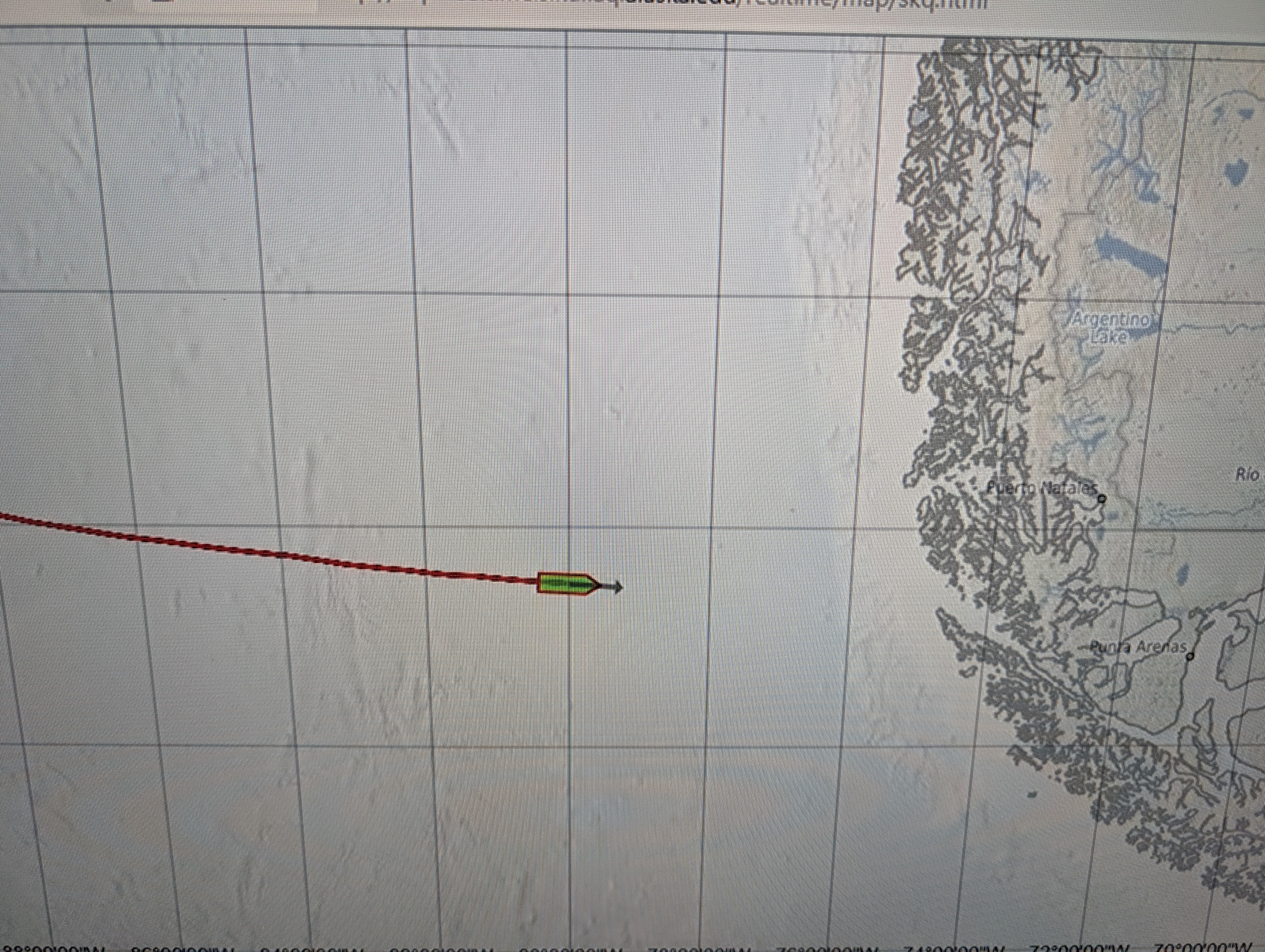
There are bets on the whiteboard as to when we will first spot land, and whose eye will spot it first. The anticipation of the first night ashore, tomorrow (again, inshallah), and the busyness that attends the end of any venture. Tying up loose ends, getting to work on those unavoidable end-of-cruise reports and bits of documentation for those who will have to deal with what we’ve built/broken. But also just a tinge of lingering in moments. Savoring a bite of Kim’s irresistible raspberry squares (“Oh yeah, I’m going to miss eating like this…”). Wondering what the Question of the Day will be on the whiteboard this morning (“What new thing did you learn today?”) Just exchanging passing howdies with a shipmate you’ve grown fond of, and thinking, “I’m going to miss them.”
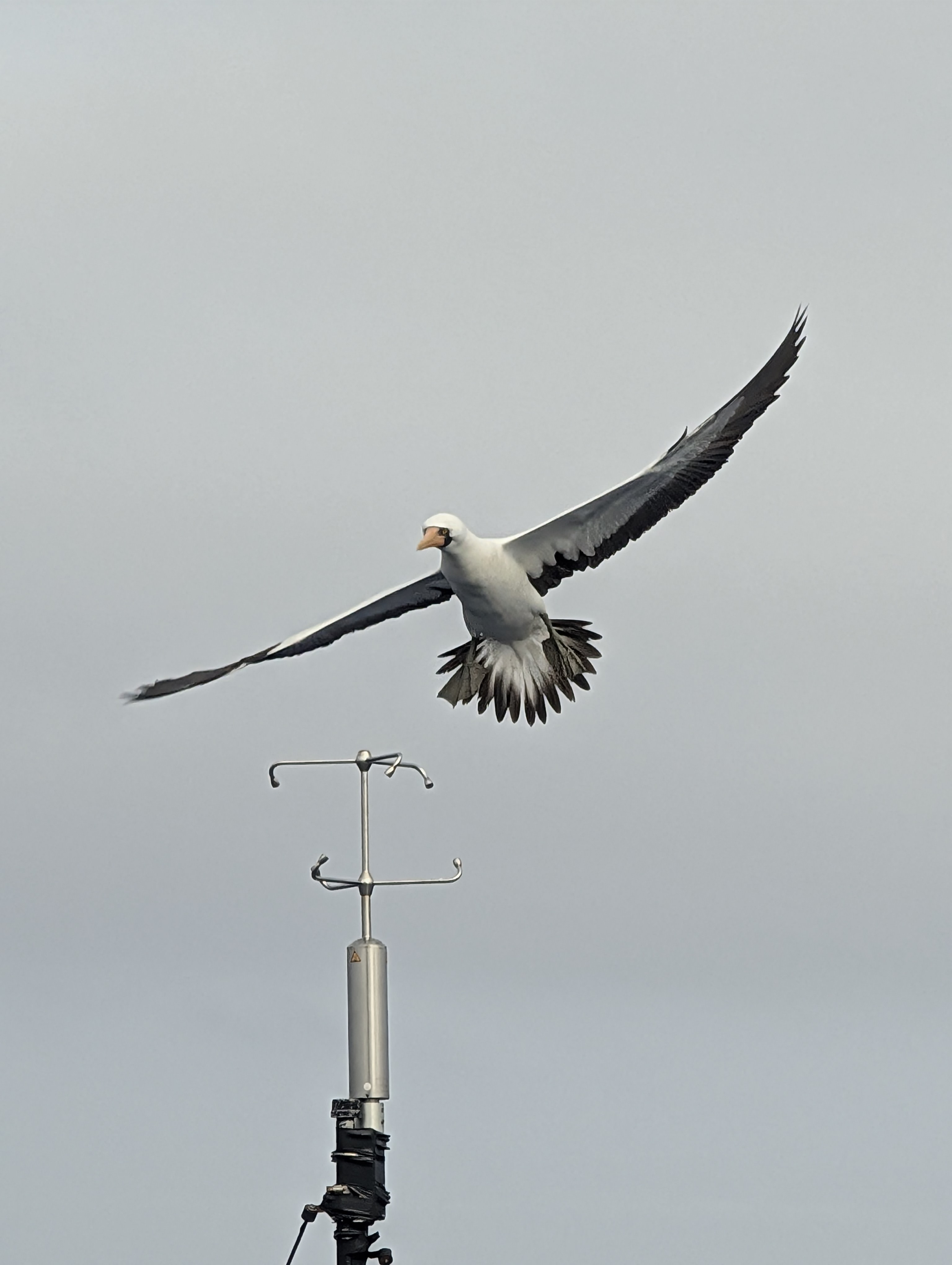
A far-from-home Nazca (or Masked?) Booby caught a ride with us for a couple of days.
We’ve got another day or so of this anticipatory nostalgia before we step off, onto the promised dry land, and those bonds begin to dissolve, and the immediacy of the ship gives way to other things, begins to fade into memory. We’ll keep some of the promises we’ve made to keep in touch; others will be remembered only as vague intentions. Didn’t I know someone from northern Idaho? And who was it who had a boat in Wrangell?
But we’ll carry the tales of what we saw and did at sea (“I saw the coolest green flash ever off the coast of Patagonia…”). And maybe we’ll be back again, here, or half a world away, but together on a ship, this one or some other, with tales to tell what the crazy things we’ve seen and done since we last set sail together. Inshallah.
 David Pablo Cohn
Green flash! I’m jealous. Sounds wonderful!
LikeLike
25 years in Florida and we never saw the green flash.
LikeLike
I’m catching up on some of your blogs I have missed and so relish. Love this one. Also love the pictures and really enjoyed the booby bird. you had a couple of great photo snags on this trip. :-)
Harmony
>
LikeLiked by 1 person