

I have to explain, right up front, that to travel with my mother – a writer, a scholar of antiquity and a student of living history – is a unique experience. When I see the Ishtar Gate of Babylon, I see an archeological wonder painstakingly assembled from shards. She sees the gate that our ancestors beheld when they were exiled and enslaved after Jerusalem was destroyed in the 5th Century BCE. She sees, with appreciation, that which remains of one of the greatest empire the world had yet seen. Ozymandius is on her lips, and the words Psalm 137 called to mind: “By the rivers of Babylon, we sat down and wept.”
That they are displayed in the capital of yet another erstwhile empire that, during her own lifetime, rose up to try and destroy us, one that took the lives of every other member of her father’s family, is all the more poignant. But, as we walk home among the “stumbling blocks” inlaid in the city’s cobblestones, the point of our conversation is how this is also a country whose children have dedicated themselves to remembering the horror of their parents’ and grandparents’ deeds. One dedicated to ensuring that it will never happen again. And it is not just lip service, she notes: this is a country much smaller than our own, and yet has still welcomed about a million refugees in the past decade alone.

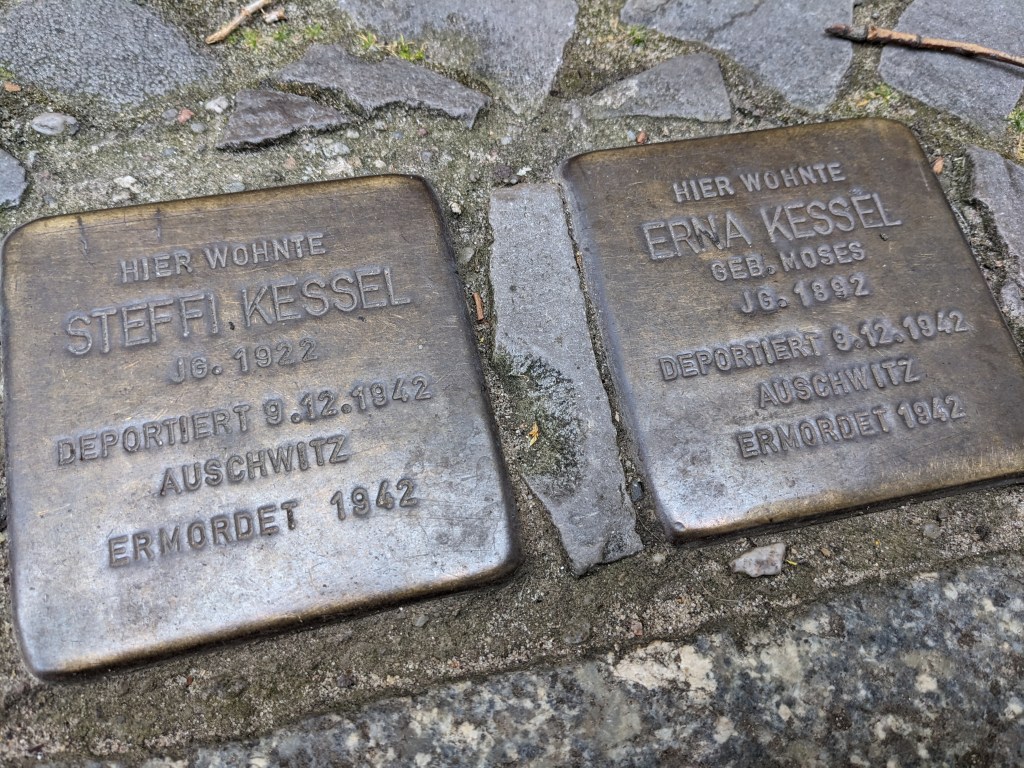
“Here lived…”
So it is with everything here: I flit by on the surface, painting in caricatures in watercolor – clay tablets, a boat ride, while my mother peels back the layers of history beneath our feet, and what they mean for us, here, now.
This is not the first time I have had this privilege: years ago, when we traveled up the Agean coast of Turkey together, she told stories from Herodotus as we crossed the Meander River and quoted Homer as we looked out on the beach from which Troy was besieged by the thousand ships of Menelaus and his ilk. But that was history; this, here, now, as you can tell, is personal.
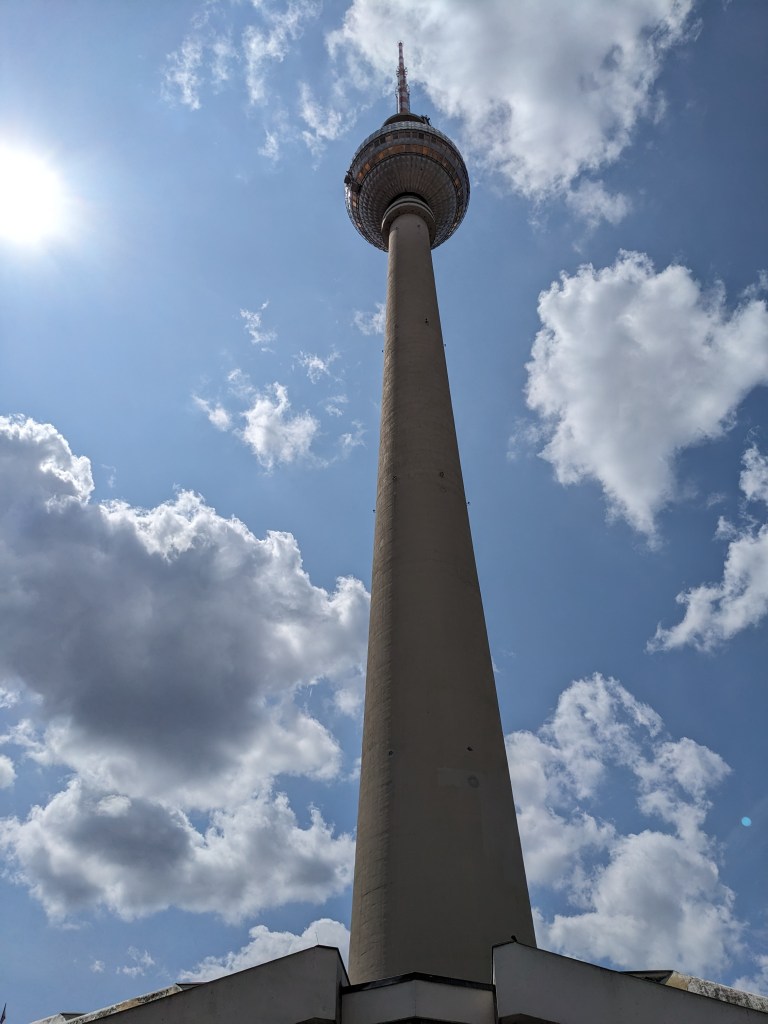
The days have also been filled with less contemplative explorations – oh my, can that woman walk! We’ve been covering about five or six miles a day over cobblestones, just rambling the city streets between landmarks, from the old Jewish cemetery where Moses Mendelssohn is buried to the iconic East German Television Tower and beyond. Stopping in whatever small cafe or restaurant catches our fancy, whenever our appetites demand. Marveling at the uniquely German flair for style, whether it be in sculpture, dress or wordplay. (That word I was looking for in my last post, by the way? Stadterkundungsschauer – “city discovery thrill”).


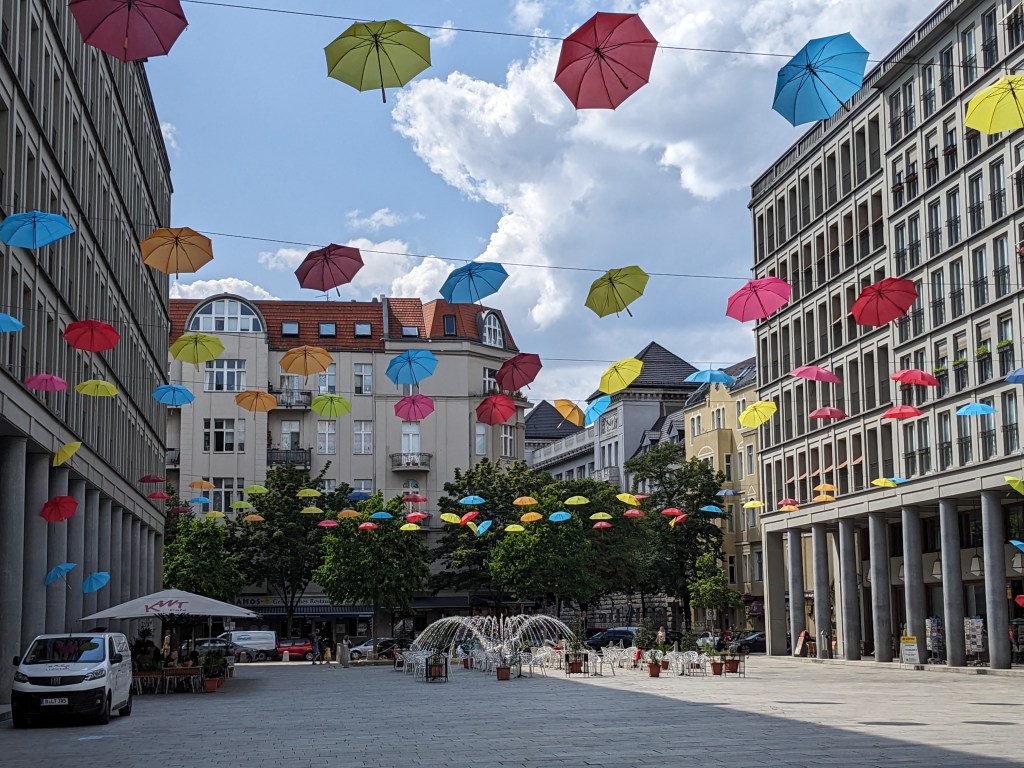

Afternoons in the heat of the day – it’s supposed to reach 94F today! – have been spent napping back at the hotel and catching up on our respective bits of work before evening sets us out again, strolling in search of a light dinner at yet another spontaneously-chosen sidewalk cafe. Or, last night, just ice cream. Then sleep, still interrupted by jetlag-induced early morning wakings, followed by contemplation of what the next morning will bring.
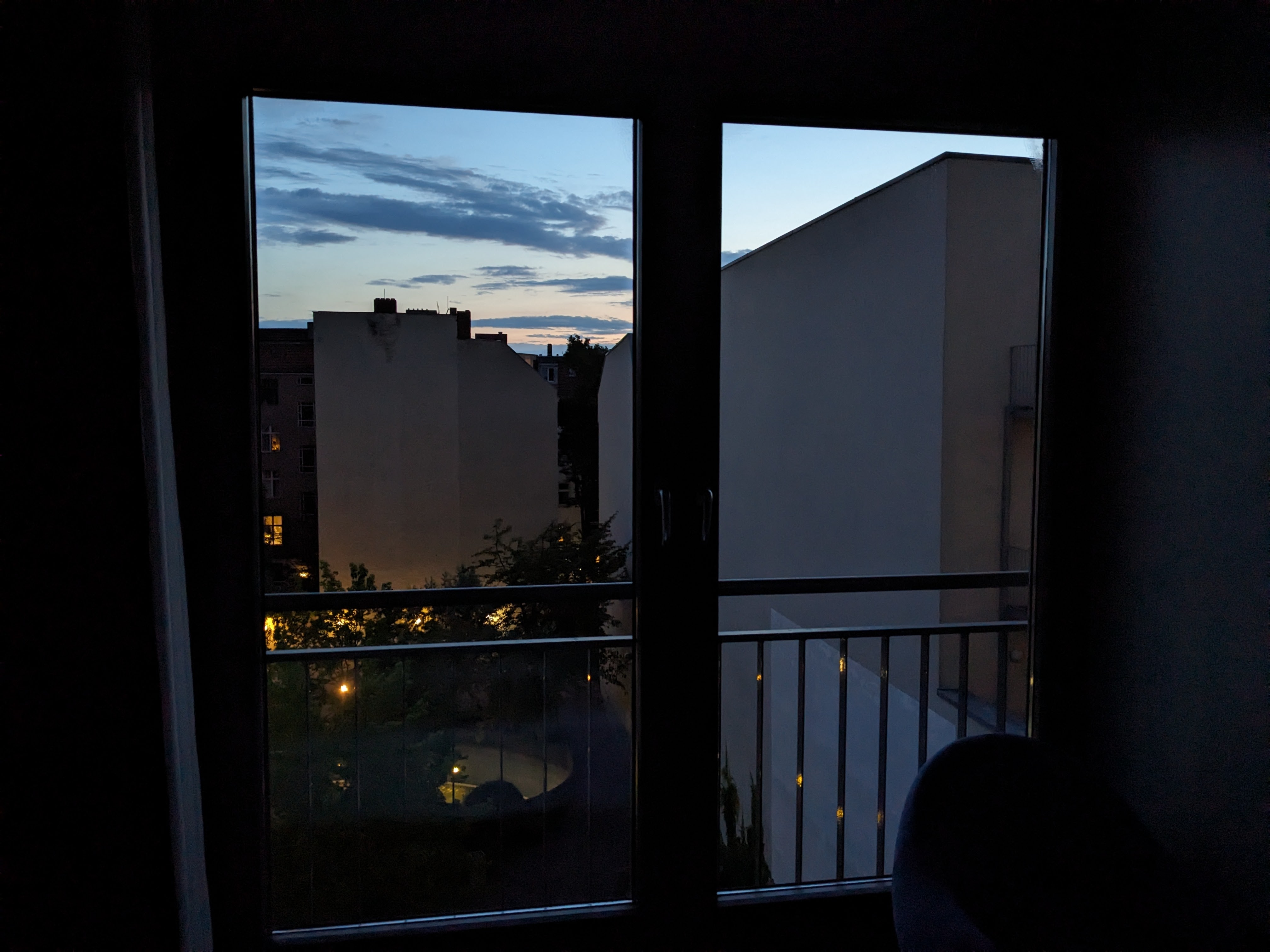
Still light at 10:15 in the evening
 David Pablo Cohn
You seem to have the best possible traveling companion for that place. Sounds like a profoundly enriching experience. Annie >
LikeLiked by 3 people
I love this post. Traveling with my mom in her later years, before Alzheimer’s totally consumed her, was beautiful. I wish we had made it back to England together. This is truly a gift, and you, being the person we all love and know, recognizes how amazing this time together is for both of you. I am excited to read your next post. Safe and wonderful travels to you and your mom.
LikeLiked by 2 people
You are fortunate
LikeLiked by 1 person
Heck yeah, I am!
LikeLike
Wonderful descriptions of your relationship withe your mom and the places you are visiting. My family and I just laid Stolpersteines for my mother, her parents, and her brother in front of their home in Strasbourg. They were sent to Auschwitz and only my mother survived, so your visit to Berlin is especially powerful for me. Please give Tamara my love. You are very fortunate to have her as your mother.
LikeLiked by 1 person
Thank you, Suzanne – that was the thing I couldn’t figure out about how the Stolpersteines happened: who initiated the creation and placement of each one. So they are funded by individuals?
LikeLike
Thought provoking. Thank you for sharing.
LikeLike
You write beautifully walking through time itself in this city freigted with history. These days with your mother are a gift to be treasured with the synergy of your eyes, in dialog, seeing more than each sees separately.
LikeLike