
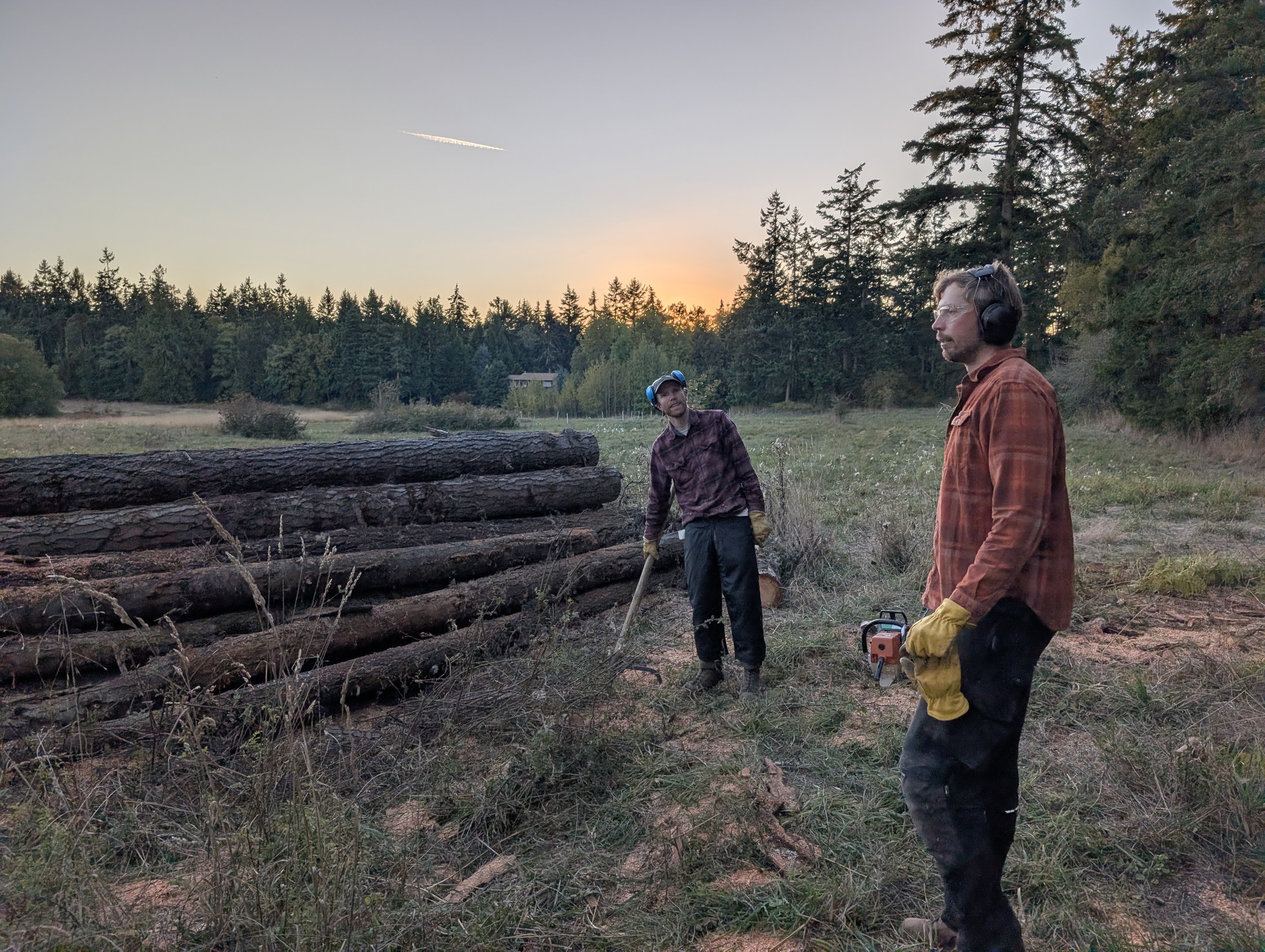
Autumn is its own bundle of joyful activities. Yes, there’s the inevitable, annual decay and dying, the flight of sun and warmth as we bolster and brace ourselves for the coming winter. But with it is the parallel joy of harvest, gathering ourselves and the literal fruits of the summer’s labors. Cooler space literally overflowing with potatoes, apples, pears. Bonfires, in the wake of the first rains, now that the dangers have passed (would those be ‘malfires’?) Pumpkins, pumpkins, pumpkins everywhere. Stacks of firewood. And cidering parties.
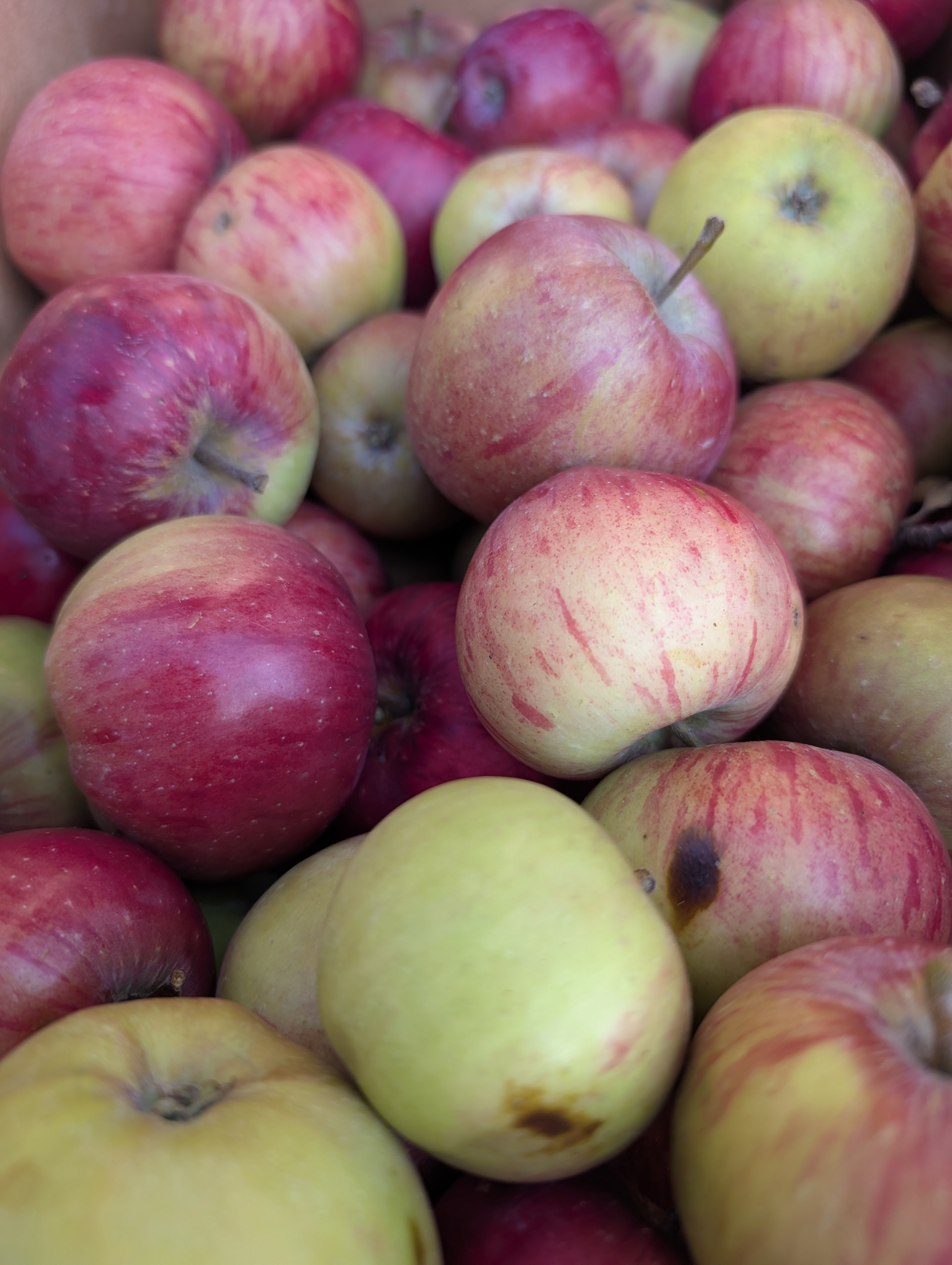
We Washingtonians are into our ciders – I’m just going to leave it at that. Never mind the uncountable hectares of apple after apple out on the eastern slope, here on the peninsula, pretty much every farm I know has more apples than they could eat, even if it were the only thing to sustain them through winter. So you dry them, you turn them to apple butter. And you cider them.
The first two of these activities are kitchen-bound and so, by nature of limited space, tend to be solitary affairs: more than one person running back and forth between the pressure cooker, food mill, mandoline and oven is bound to end in blood, burns and tears.
But cidering? Oh, cidering almost demands community: hauling the apples up, cleaning the press. Cleaning the carboys. Finding (then cleaning) the airlocks, caps and related paraphernalia. Grinding, grinding grinding. Dumping, cleaning, pressing, pressing until the wood starts making popping sounds. More grinding. Swapping catch pans, pouring, straining, swapping again. Carting off the pomace and loading up the next batch. Cidering on your own would be a long and tiresome affair. But as a cider party, the “party” part just comes naturally.
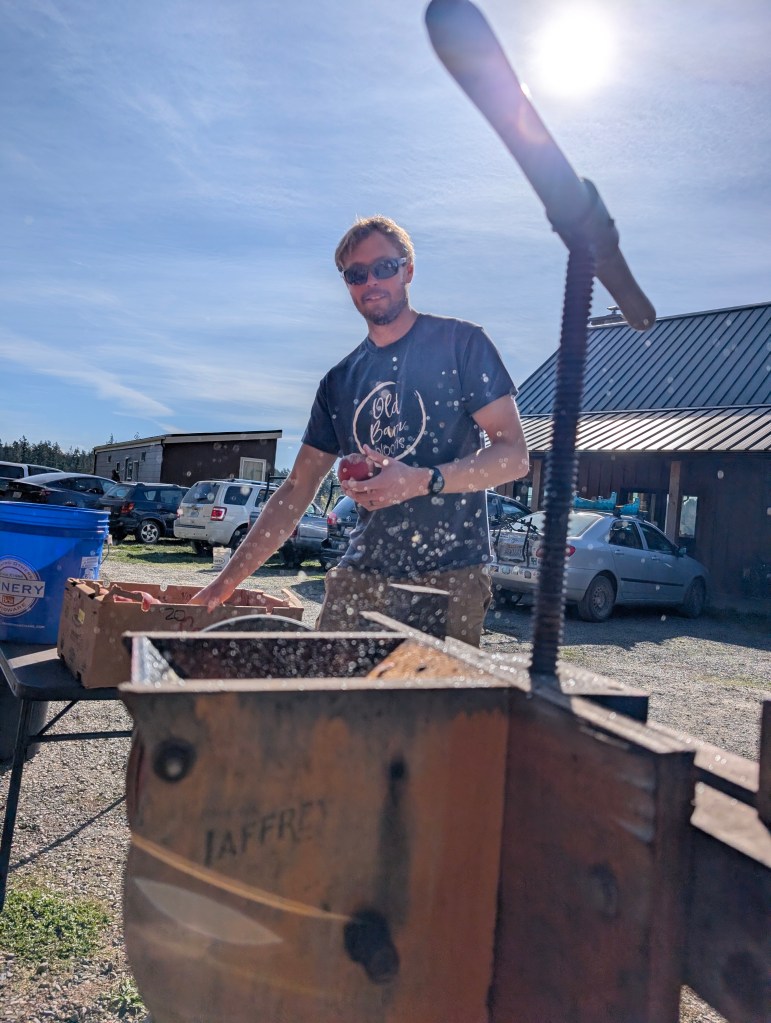
We took at least one shortcut this year, borrowing an electric grinder from our neighbor Denise. Past years have taken hours of cranking, cranking the finicky and cantankerous manual grinder; with Denise’s, we just dropped apples into the hopper and, in a spray of juice, crunched up bits of pulp spat out the bottom as fast as we could feed it.
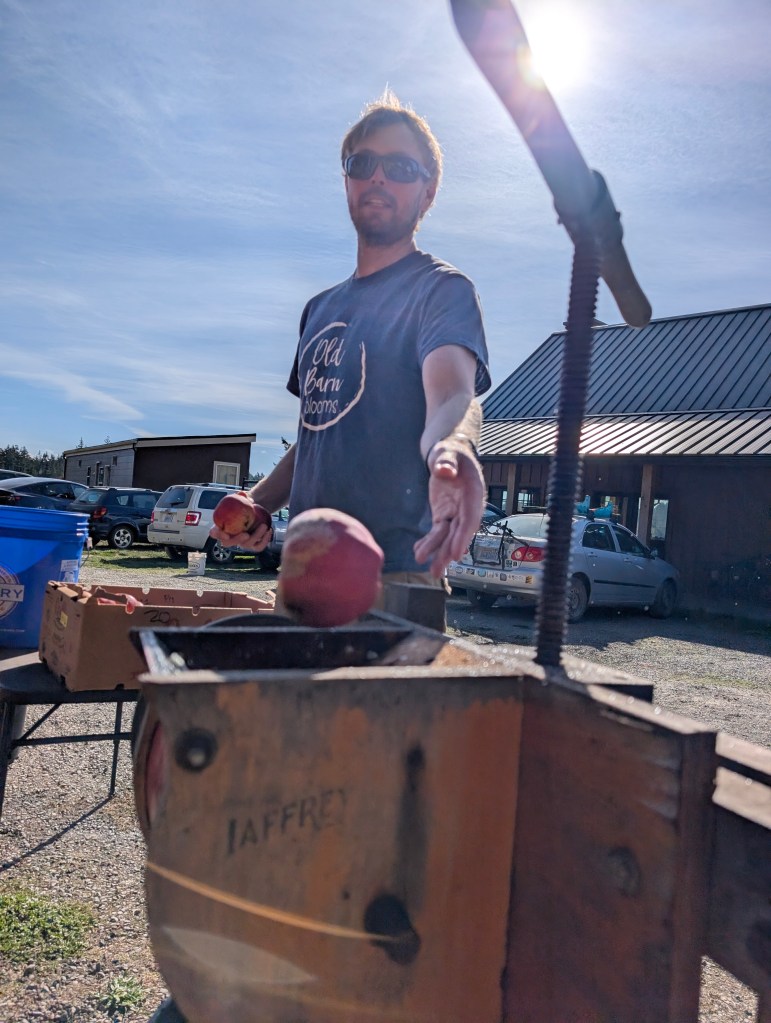
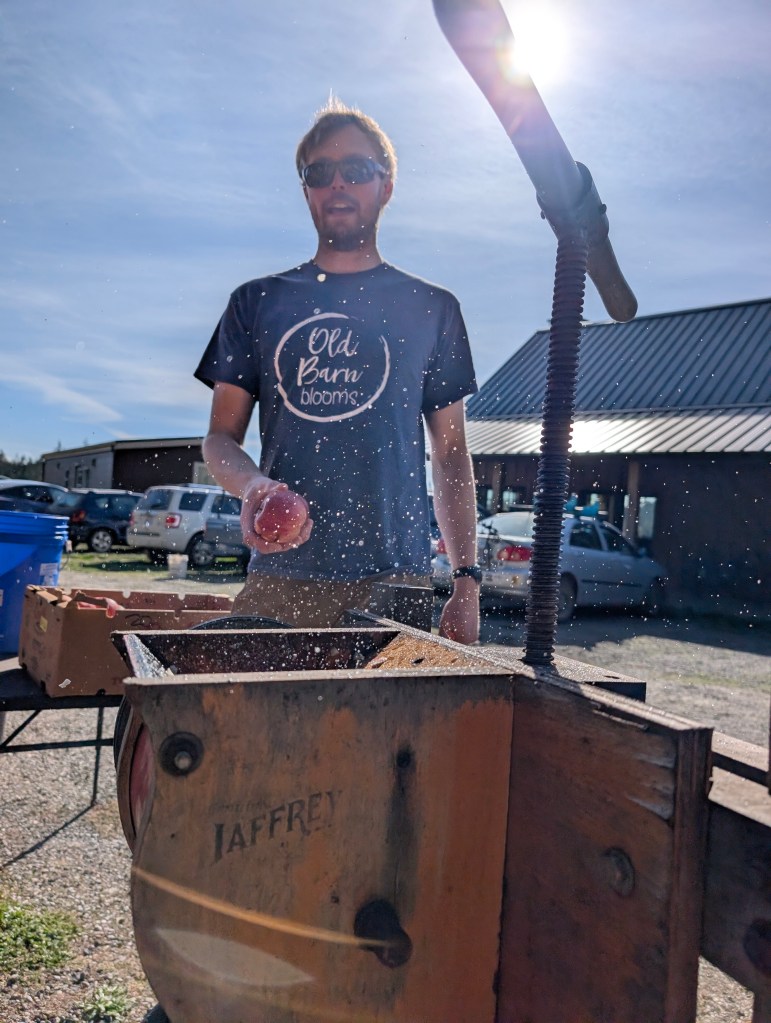
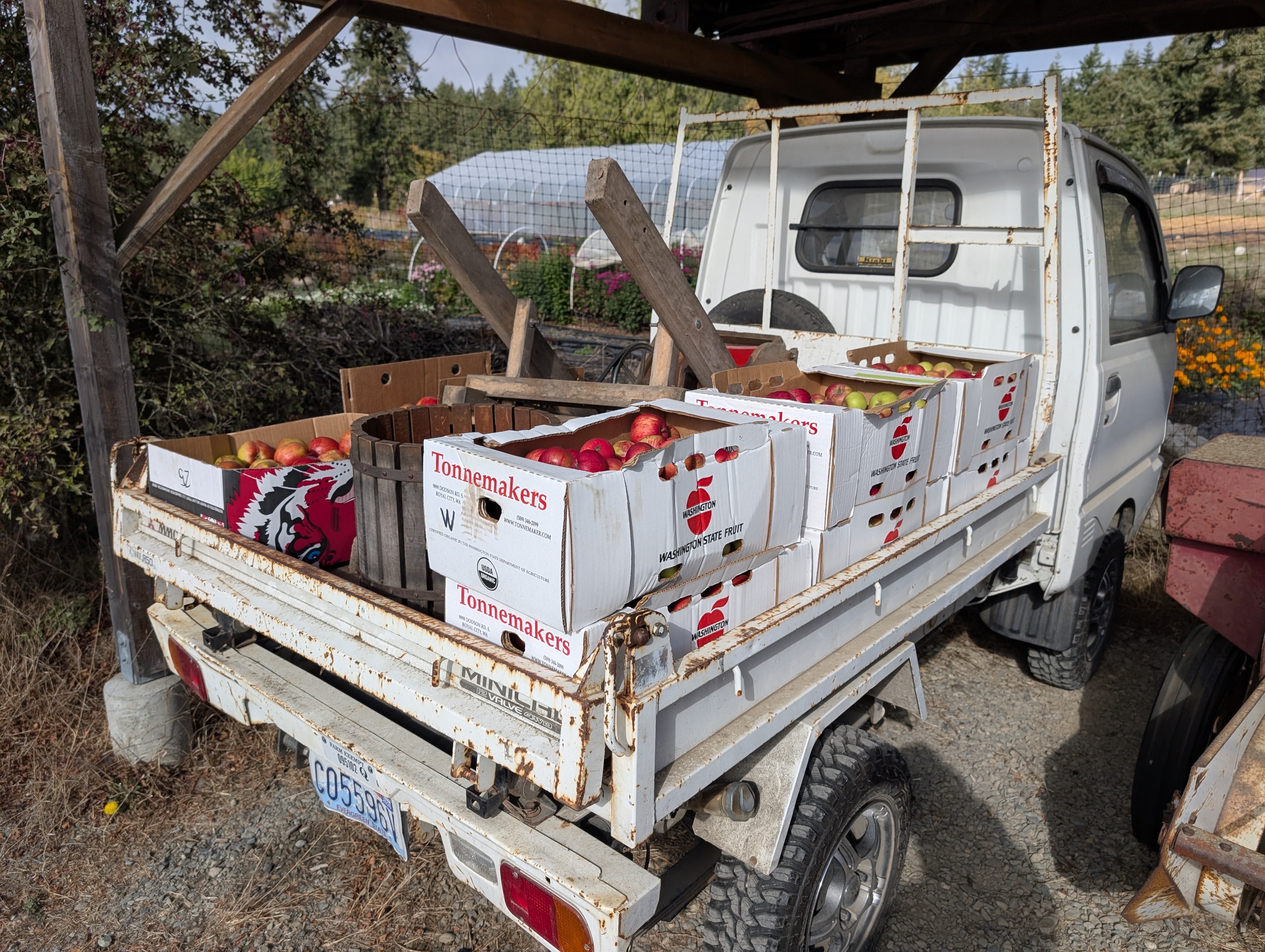
Took us less than half an hour to go through four or five boxes of King apples from the old Swanson tree, and about the same for five more in Cortlands. Pierce had bought up all the gloriously purple Pendragons, and juiced those separately, with Logan following with a batch or two from her own nursery.
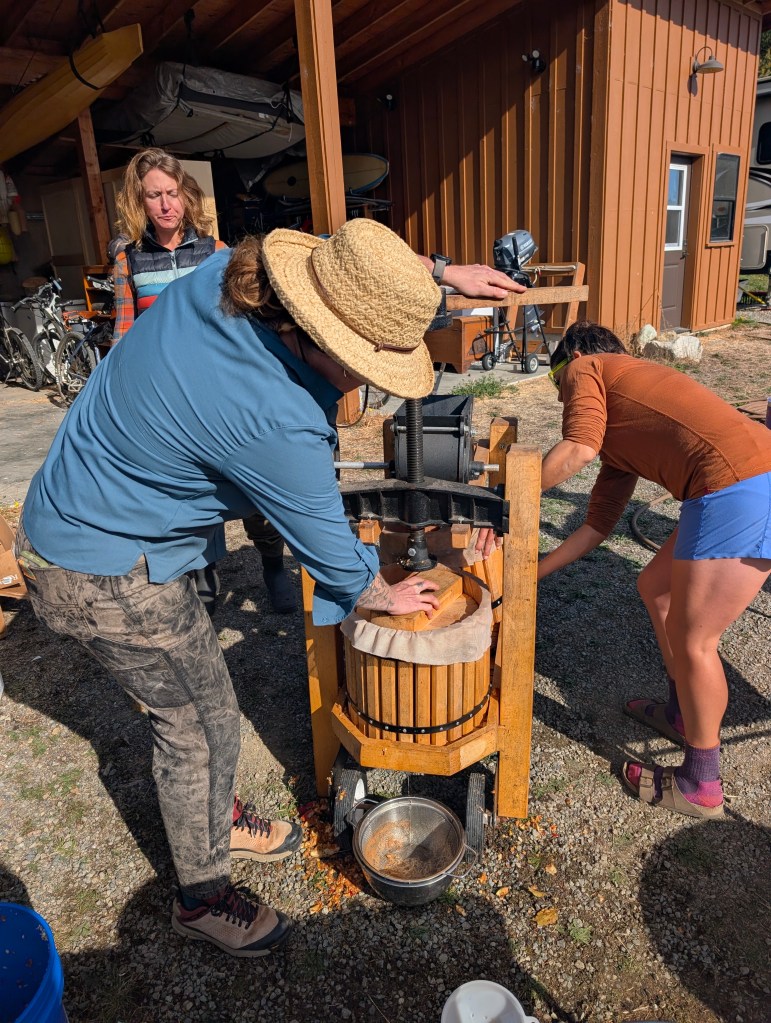
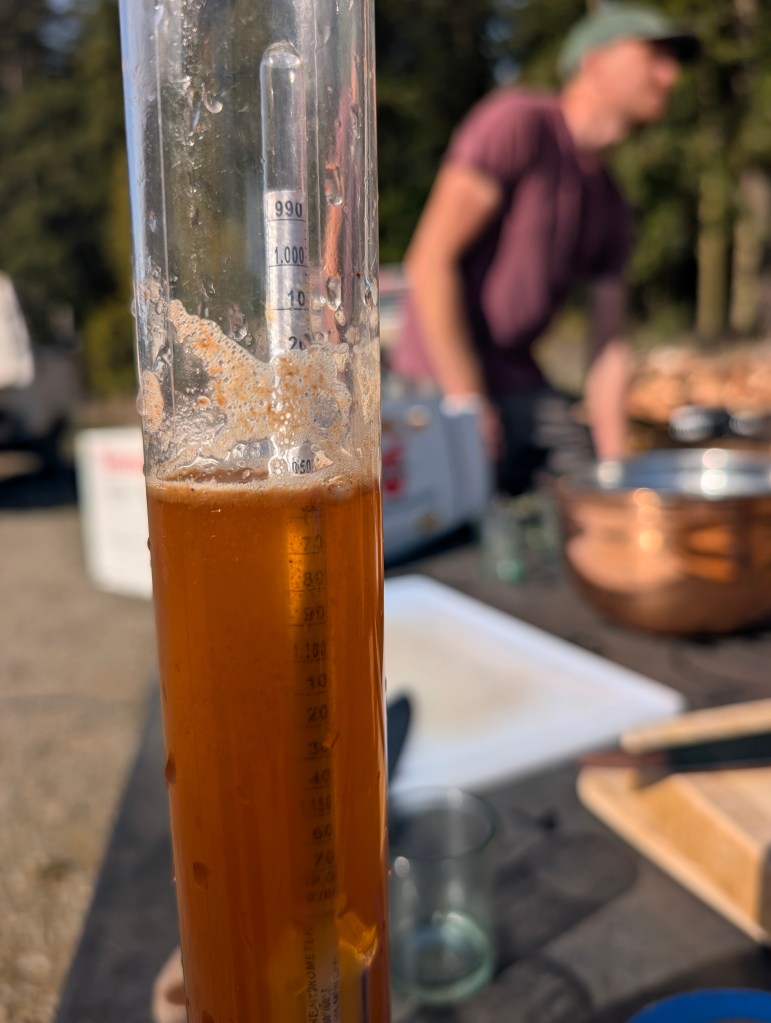
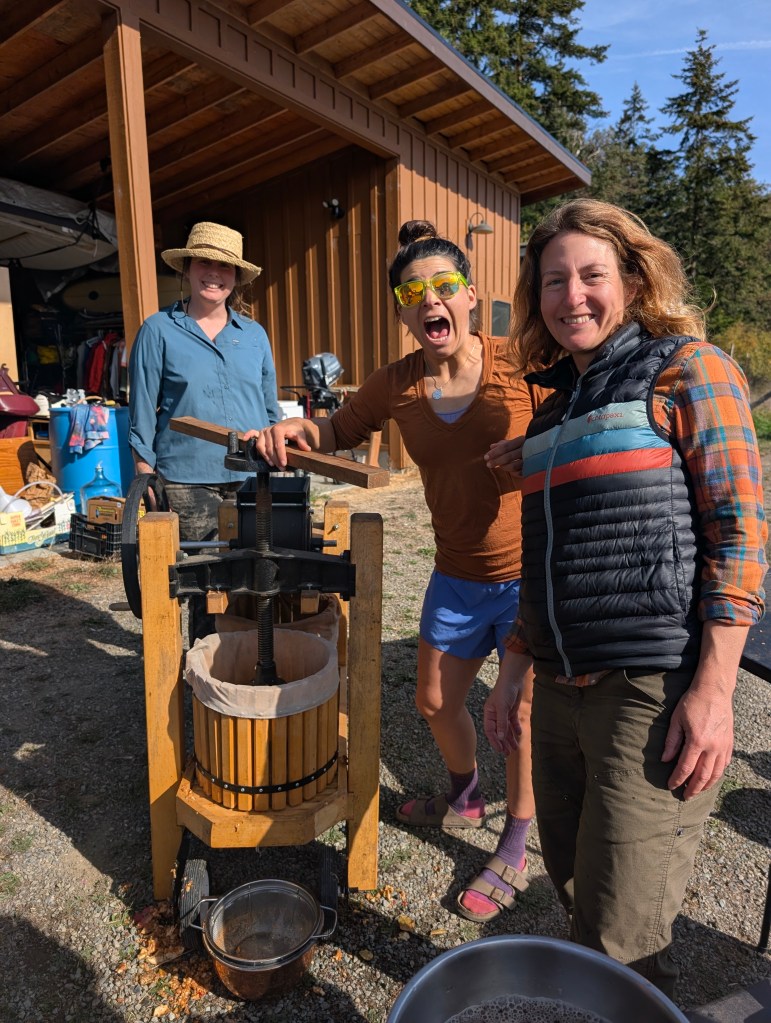
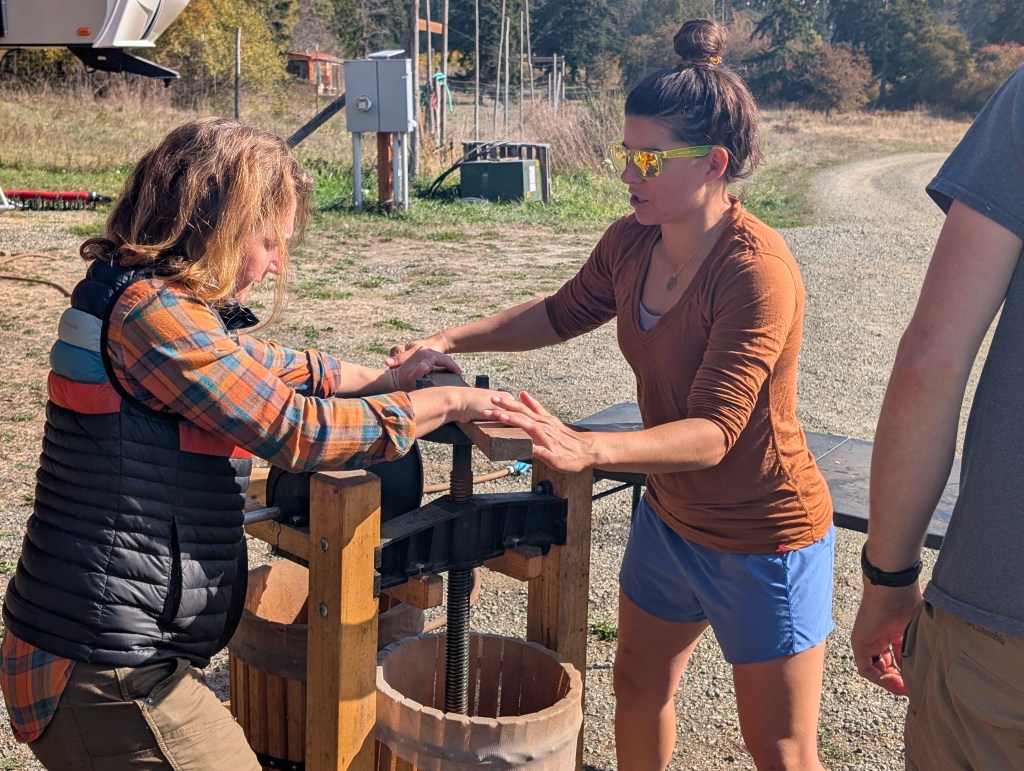
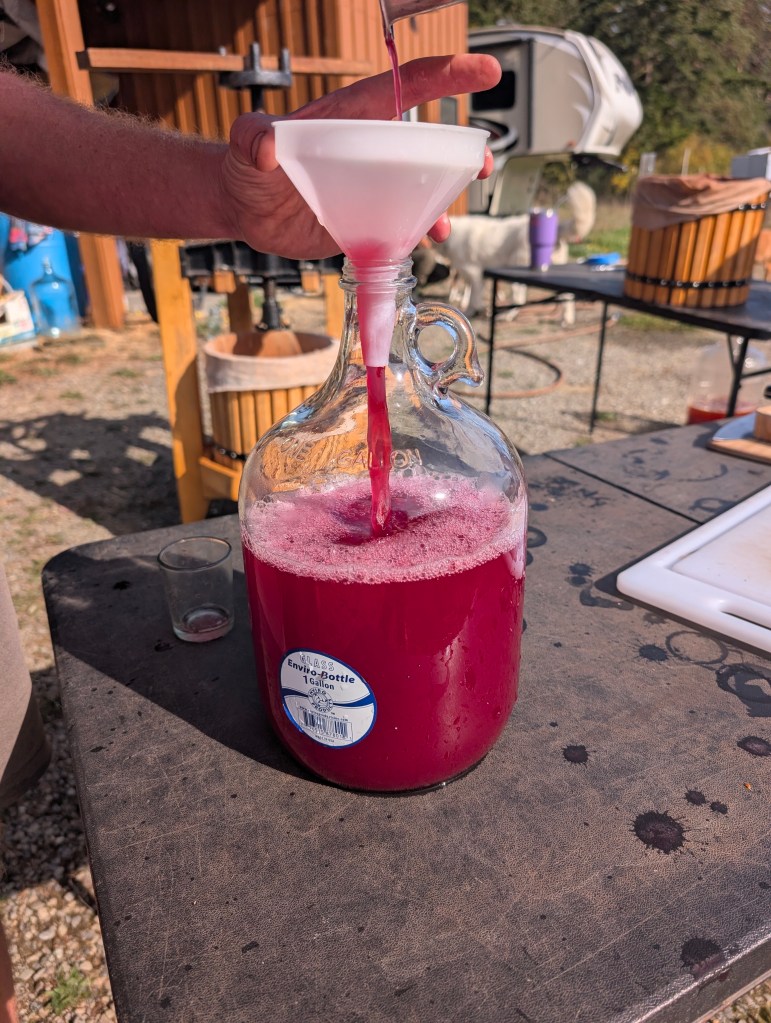
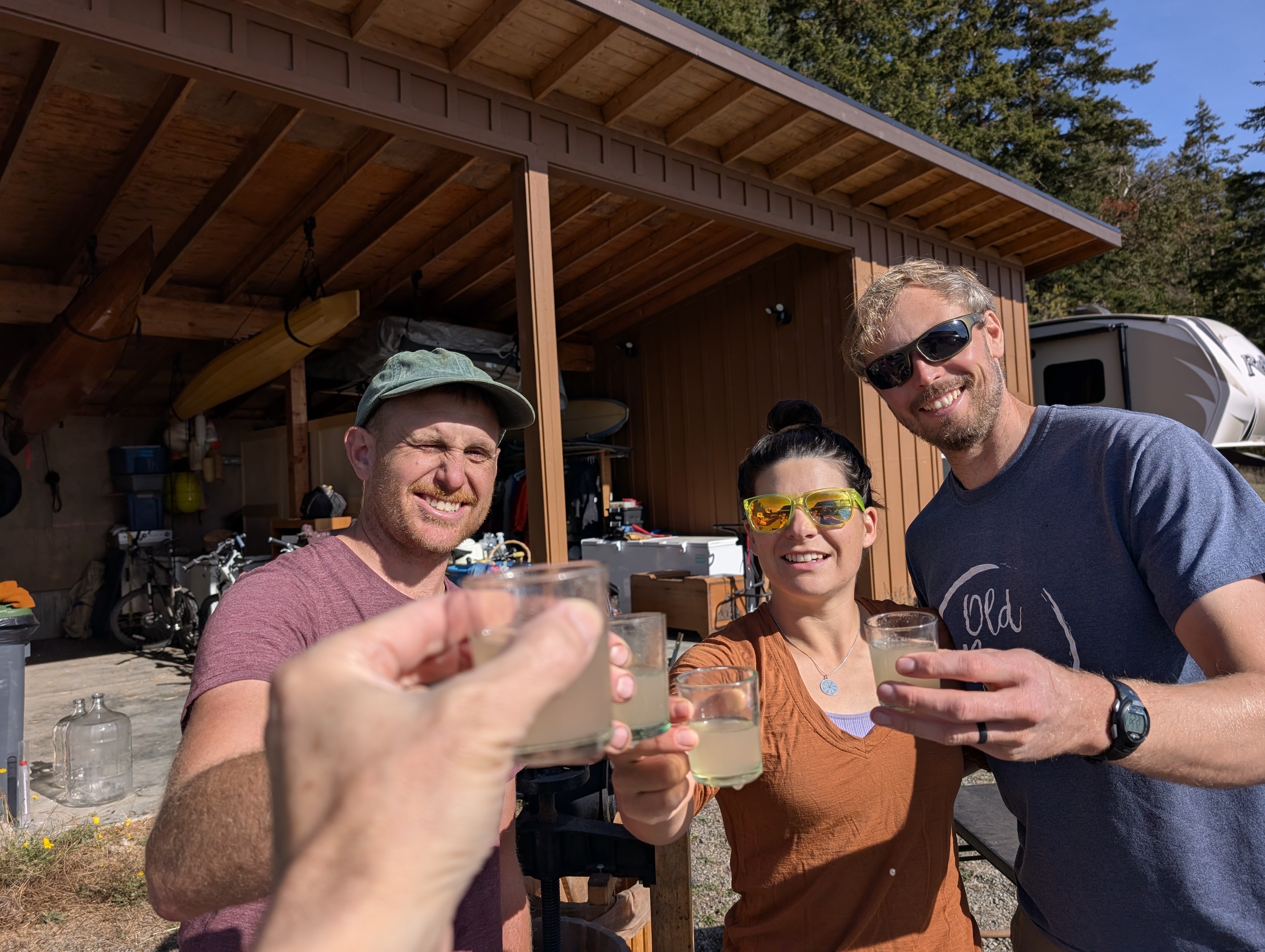
All in all, we probably put out about 10-12 gallons of cider, minus that which got diverted to repeated and perhaps overly-enthusiastic “taste tests”. Four each of “single varietal” King and Cortland, and a gallon or two each on the Pendragon and mixed batches. Jacob has done whatever magical chemistry one does to get the fermentation started. And now, as the saying goes, we wait.


Great little piece on cidering! I remember it was TWO YEARS AGO that Gretchen and I came out for a visit, and we went out cider tasting. Good times…
Brian
LikeLike
Want some cranberries to go with all those apples? We got some, here on the opposite coast.
And it wasn’t until I got to the word “fermentation” at the end that I realized, “Oh, they’re making that sort of cider!” (Though, really, I should have twigged at “carboys” and “airlocks” up at the beginning.)
LikeLike
I did very much enjoy your cranberries post! And to be honest, we each grabbed a quart or two of “fresh” cider, which – blasphemy! – I actually enjoy much more than the fermenty kind.
LikeLike
We can’t get a decent apple here. I’m so intrigued by the abundance you have in Washington. By the time various stores import them from Washington, they’re mealy.
LikeLike
It *is* kind of magical here. We have at least 12 wildly different types of apples on the farm alone – Gravenstein, Crison Topaz, Belle de Boskoop, Hudson’s Golden Gem, Pendragon, Bramley’s and half a dozen others you’ve never heard of, each with its own unique flavor and personality. And all along the neighboring streets, apples of every variety dropping everywhere – you just pick one up off the grass as you pass, wipe it off on your shirt and chomp in…
LikeLike
Cider was the main reason we have apples, as I understand it.
From https://en.wikipedia.org/wiki/Johnny_Appleseed
Chapman planted his apples by seed, not grafting,[61][62] but without grafting, only about one in 100 seedlings will yield an apple that is edible as a fruit.[63] According to Henry David Thoreau, an apple grown from seed tastes “sour enough to set a squirrel’s teeth on edge and make a jay scream.”[64] But apples from seed are perfectly fine for making hard cider,[65] and in the early part of the 19th century, there was a demand for hard cider—Ohioans ages 15 and over drank, on average, 30 gallons (113.5 l) of hard cider per year (10.52 ounces, ca. 300 ml, per day).[66] Author Michael Pollan believes that since Chapman was against grafting and thus virtually all his apples were not edible and could be used only for cider: “Really, what Johnny Appleseed was doing and the reason he was welcome in every cabin in Ohio and Indiana was he was bringing the gift of alcohol to the frontier. He was our American Dionysus.”[67][68]
.. and from that article I learned that Chapman may have begun in my neck of the woods, Wilkes-Barre, PA. When I was growing up, I remember there was a cider mill nearby. I don’t recall ever going, and we didn’t have apples.
LikeLike
One bit of particular fun here is finding “feral” apples that are actually edible. My friends down at Compass Rose farm have a feral apple tree in their woods, probably from seed dropped by a bird or pooped out by a deer, that has really lovely, unique apples.
LikeLike